

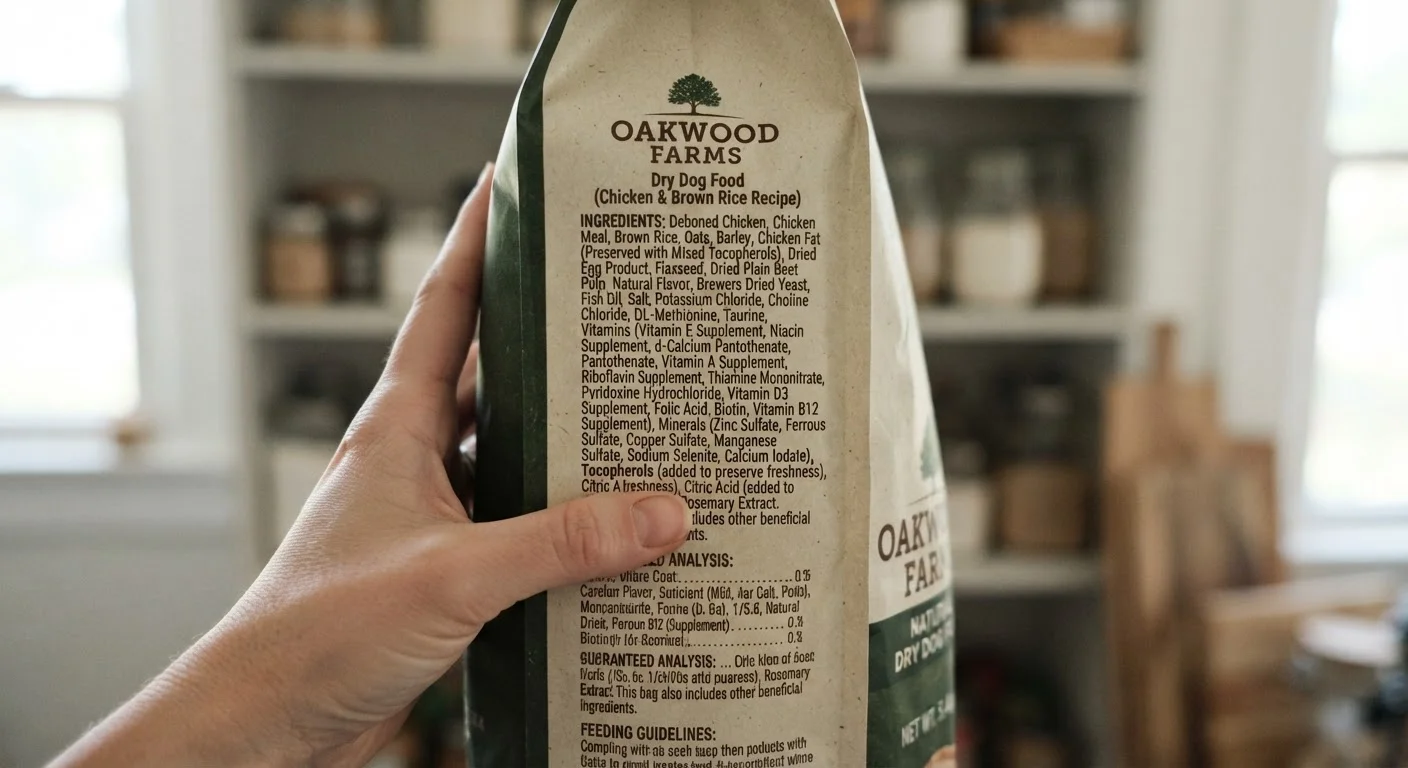
Key Takeaways
- Ingredients are listed by weight before processing, so moisture content significantly affects their position.
- Ingredient splitting can make lower-quality components appear further down the list than they actually belong.
- Named protein sources like 'chicken' or 'salmon' are more transparent than vague terms like 'meat meal'.
- Not all additives are harmful — preservatives and vitamins are often essential for shelf stability and nutrition.
- A shorter ingredient list is not automatically better; nutrient completeness matters more than ingredient count.
What you will need
Why the Ingredient List Works the Way It Does
In the United States, pet food ingredient lists are regulated by the Association of American Feed Control Officials (AAFCO) and, in practice, by state feed laws that adopt AAFCO guidelines. Manufacturers are required to list every ingredient in descending order by weight as added — meaning the weight is measured before the food is cooked or processed, not after.
This detail matters enormously. Raw chicken, for example, is roughly 70% water. Once cooked, it loses most of that moisture and shrinks considerably. So a food that lists 'chicken' first may actually contain less chicken protein by dry weight than a food listing 'chicken meal' second. Chicken meal has already had most of its moisture removed, making it a more concentrated protein source by weight.
For a deeper look at how those proteins, fats, and carbohydrates function in your pet's body, see our guide on proteins, fats, and carbohydrates in your dog's diet.
Moisture Content Changes Everything
When comparing wet and dry foods, the ingredient order tells you about pre-cooking weight — not the final nutrient contribution. A wet food listing 'chicken' first may have a very different protein percentage than a dry food with the same label. Use the Guaranteed Analysis panel alongside the ingredient list for a more complete picture.
Understanding Ingredient Splitting
One of the most important concepts for any label-savvy pet owner to grasp is ingredient splitting. This occurs when a manufacturer lists a single ingredient type under multiple names to push it further down the list — making it appear less prominent than it truly is.
A common example involves grains or starches: a label might list 'peas,' 'pea protein,' 'pea starch,' and 'pea fiber' as separate entries. Each one occupies a lower position individually, but if combined, the total pea content might outweigh the named protein at the top of the list. This practice is technically permitted but can obscure the food's actual composition.
When evaluating a new food, mentally group similar ingredients and consider whether their combined weight might rank higher than their individual placements suggest. Our practical checklist for evaluating a new pet food walks through this and other quality checks in detail.
Ingredient Splitting Can Be Misleading
Splitting a single ingredient source across multiple named fractions is a legal practice that can make a dominant carbohydrate or secondary protein source appear less significant than it is. Always mentally combine related entries before assessing a food's primary composition. If you are evaluating a grain-free food, our article on grain-free pet diets and the marketing behind them provides important context.
Decoding Common Ingredient Terms
Regulatory definitions govern how ingredients must be named, which helps — but the terminology still requires some translation.
- Named meat meals (e.g., 'chicken meal,' 'salmon meal'): Rendered, moisture-reduced protein concentrates. Specific names indicate a single, identified species — a meaningful transparency marker.
- Generic terms (e.g., 'meat meal,' 'poultry by-product meal'): The source species is unspecified, which limits your ability to identify potential allergens or assess quality consistency.
- By-products: AAFCO defines these as clean parts of the animal other than muscle meat — including organs, which are often nutritionally dense. The word is not automatically a negative signal.
- Whole grains vs. refined fractions: 'Brown rice' retains the bran and germ; 'rice flour' is more refined. Whole ingredients typically offer more fiber and micronutrients.
- Preserved fats: Fats oxidize and go rancid without preservation. Natural preservatives like mixed tocopherols (vitamin E) or rosemary extract are commonly used in place of synthetic alternatives.
For more context on how label claims like 'complete and balanced' are regulated, see what 'complete and balanced' actually means on a pet food label.
Additives, Vitamins, and What Appears at the Bottom
The final section of most ingredient lists reads like a chemistry glossary: long chemical names, numbered compounds, and vitamin designations. This portion is often where pet owners feel most lost — and where the least cause for alarm typically exists.
Vitamins and minerals are required by AAFCO nutritional profiles and are added in small, precise amounts to ensure the food meets minimum standards. Their position at the bottom of the list reflects low added weight, not low importance. A food without them is less likely to be nutritionally complete.
Preservatives like mixed tocopherols (a natural vitamin E source) prevent fat oxidation and extend shelf stability. Artificial colorings, by contrast, serve no nutritional function and are added purely for visual appeal — generally for the owner's benefit, not the pet's.
Additives Are Not All Equivalent
Vitamins and minerals listed as additives are nutritionally essential — their presence is a quality signal, not a cause for concern. Artificial colorings, by contrast, add no nutritional value and exist solely for visual appeal. When evaluating a food for a pet with known sensitivities, review both categories carefully and discuss findings with a veterinarian before making a switch.
If your pet has a known sensitivity or allergy, the additive section deserves careful attention. Certain artificial dyes and flavor enhancers have been associated with sensitivities in some animals. When in doubt, consult a veterinarian or veterinary nutritionist before switching foods.
This article is for general educational purposes and does not constitute veterinary or nutritional advice. Always consult a qualified veterinarian for decisions specific to your pet's health.