

| Species most commonly affected | Dogs and cats (varies by toxin) |
| Most acutely dangerous food — dogs | Xylitol and grapes/raisins (ASPCA Animal Poison Control Center) |
| Most acutely dangerous food — cats | Allium-family plants (garlic, onion) (Veterinary toxicology literature) |
| Emergency contact (US) | ASPCA Animal Poison Control: (888) 426-4435 (Fee may apply) |
| Key action on suspected ingestion | Contact vet immediately — do not wait for symptoms |
Why Some Human Foods Are Dangerous to Pets
Dogs and cats metabolize food differently than humans do. Their enzyme pathways, organ function, and nutritional requirements diverge significantly from ours, which means substances that are harmless — or even beneficial — for people can become toxic or lethal at relatively small doses in companion animals.
This is not a list of foods that are merely unhealthy or nutritionally inappropriate. The items covered here have documented toxic mechanisms, and exposure — even in modest amounts — can trigger serious clinical consequences. For a broader look at where feeding boundaries lie, see our guide on feeding pets human food.
| Species most commonly affected | Dogs and cats (varies by toxin) |
| Most acutely dangerous food — dogs | Xylitol and grapes/raisins (ASPCA Animal Poison Control Center) |
| Most acutely dangerous food — cats | Allium-family plants (garlic, onion) (Veterinary toxicology literature) |
| Emergency contact (US) | ASPCA Animal Poison Control: (888) 426-4435 (Fee may apply) |
| Key action on suspected ingestion | Contact vet immediately — do not wait for symptoms |
High-Risk Foods: Dogs and Cats
The following foods are considered toxic to both species, though the severity and mechanism can differ between dogs and cats.
Hemolytic Anemia
A condition in which red blood cells are destroyed faster than the body can produce them, reducing the blood's ability to carry oxygen. In pets, it can be triggered by exposure to Allium-family foods.
Thiosulfates
Sulfur-containing compounds found in onions, garlic, and related plants that damage red blood cells in dogs and cats, leading to hemolytic anemia.
Methylxanthines
A class of stimulant compounds that includes theobromine and caffeine, found in chocolate and coffee. Pets cannot metabolize these efficiently, making them toxic at relatively low doses.
Xylitol
A sugar alcohol used as a sweetener in many sugar-free products. In dogs, it causes a dangerous drop in blood sugar and can lead to acute liver failure.
Hypoglycemia
An abnormally low level of blood sugar. When induced by xylitol in dogs, it can cause weakness, seizures, and can be life-threatening without prompt treatment.
Grapes and Raisins
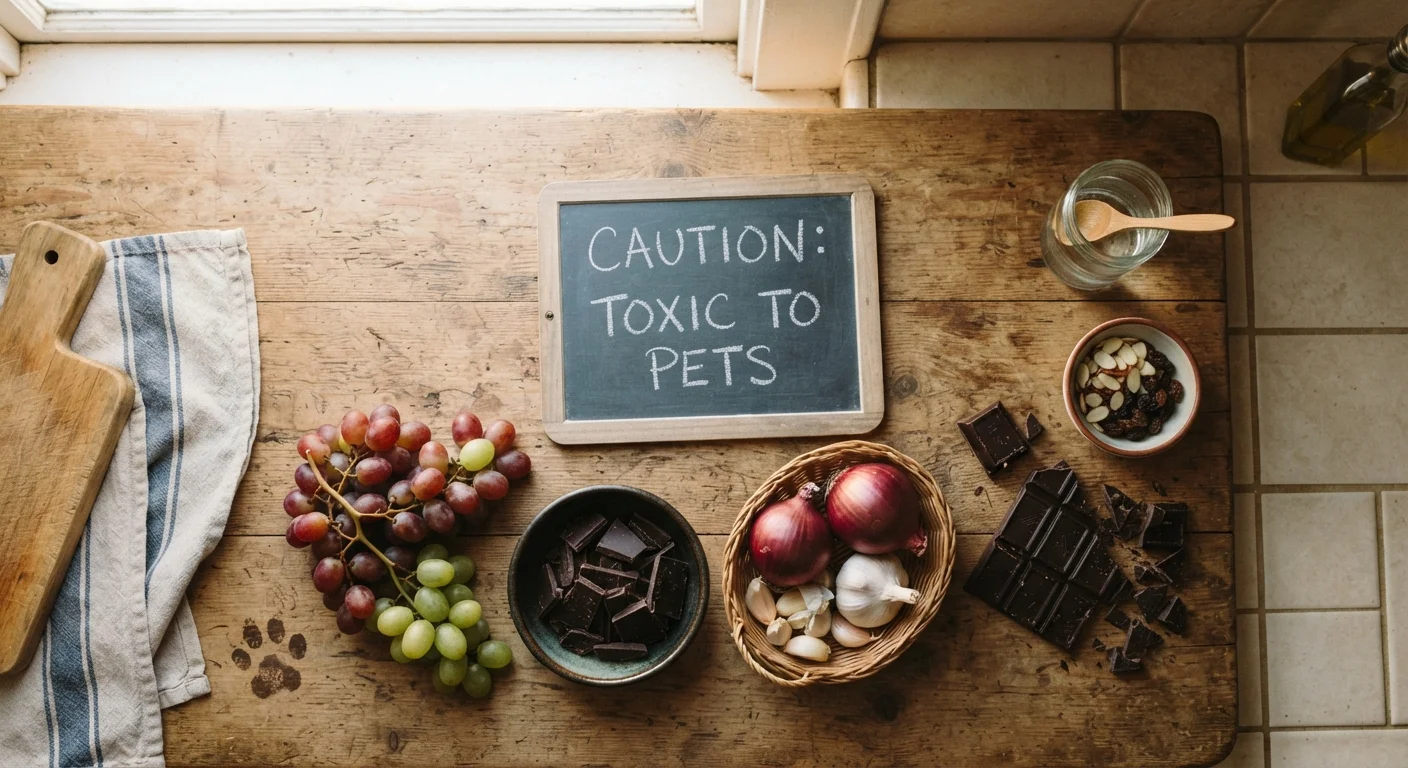
Even small quantities of grapes or raisins can cause acute kidney failure in dogs. The exact toxic compound has not been definitively identified, but the clinical outcome — rapid deterioration in renal function — is well established. Cats appear susceptible as well, though fewer documented cases exist. No safe threshold is known; any ingestion should be treated as an emergency.
Onions, Garlic, Leeks, and Chives (Allium Family)
All members of the Allium genus contain compounds called thiosulfates and organosulfides that damage red blood cells, leading to hemolytic anemia. Cats are more sensitive than dogs, but both species are at risk. Toxicity applies whether the food is raw, cooked, powdered, or dehydrated — powdered garlic and onion, commonly found in baby food and seasoning mixes, are particularly concentrated sources.
Xylitol (Birch Sugar)
Xylitol is a sugar alcohol found in sugar-free gum, some peanut butters, candies, baked goods, and certain medications. In dogs, it triggers a rapid release of insulin, causing life-threatening hypoglycemia (low blood sugar), and can also cause acute liver failure. Cats appear less commonly reported in toxicity cases, but the compound should be avoided for both species.
Chocolate and Caffeine
Theobromine and caffeine — methylxanthines found in chocolate, coffee, tea, and energy drinks — cannot be efficiently metabolized by dogs or cats. Dark chocolate and baking chocolate contain far higher concentrations than milk chocolate. Clinical signs include vomiting, muscle tremors, seizures, and cardiac arrhythmias. Doses that cause harm are relatively small relative to body weight.
#1
Category of pet poisoning calls in the US
Food and household products consistently rank among the top reasons pet owners contact the ASPCA Animal Poison Control Center each year.
~1/4 oz
Baking chocolate potentially toxic to a 10 lb dog
Methylxanthine concentrations in baking chocolate are significantly higher than in milk chocolate, lowering the toxic threshold substantially.
Alcohol
Ethanol is toxic to pets at doses much lower than those that affect humans. Even small amounts — including alcohol in fermented foods, raw dough, or desserts — can cause dangerous drops in blood sugar, blood pressure, and body temperature, progressing to respiratory depression.
Raw Yeast Dough
Unbaked dough containing active yeast expands in the warm environment of the stomach, causing painful bloating and potential gastric rupture. As yeast ferments, it also produces ethanol, compounding the toxic risk described above.
Macadamia Nuts
Macadamia nuts are toxic to dogs, causing weakness, hyperthermia, vomiting, and tremors. The mechanism is not fully understood. Cats are not commonly reported as affected, but avoidance is still advised given the lack of established safety data.
What to Do If Your Pet Ingests a Toxic Food
Time is a critical factor in toxin exposure. If you suspect your dog or cat has eaten any of the foods listed here, contact your veterinarian or an animal poison control service immediately — do not wait for symptoms to appear. Some toxins, such as xylitol and grapes, cause irreversible damage before clinical signs become obvious.
Animal Poison Control Resources (US)
The ASPCA Animal Poison Control Center operates 24 hours a day at (888) 426-4435; a consultation fee may apply. The Pet Poison Helpline is another option at (855) 764-7661. Your veterinarian can also help coordinate emergency care and may be able to contact these services on your behalf.
Do not attempt to induce vomiting unless specifically directed to do so by a veterinary professional. Inducing vomiting incorrectly — or with caustic substances — can cause additional harm. Bring the food packaging or a description of the item, including estimated quantity ingested, to assist with triage.
Understanding nutritional boundaries more broadly can also help prevent accidental exposure. Common feeding assumptions vets often correct is a useful companion reference. And because dogs and cats have fundamentally different dietary requirements, understanding why their foods differ also reduces the risk of inadvertent nutritional harm.
This article provides general educational information about food toxicity in pets and is not a substitute for professional veterinary advice. If your pet has ingested a potentially toxic substance, contact a licensed veterinarian or animal poison control center immediately.