

Key Takeaways
- Feeding guidelines on packaging are population averages, not personalized prescriptions for your individual pet.
- Caloric density varies significantly between food types, so always check the unit the guideline is measured in.
- Age, weight, activity level, and reproductive status all influence how much food your pet actually needs.
- Body condition score is a more reliable ongoing gauge than the scale alone.
- Your veterinarian is the best resource for adjusting portions to suit your specific animal.
Start here
What Feeding Guidelines Actually Are
Next
How to Read the Numbers on the Label
Then
Factors That Change How Much Your Pet Needs
Apply it
Putting It Into Practice
What Feeding Guidelines Actually Are
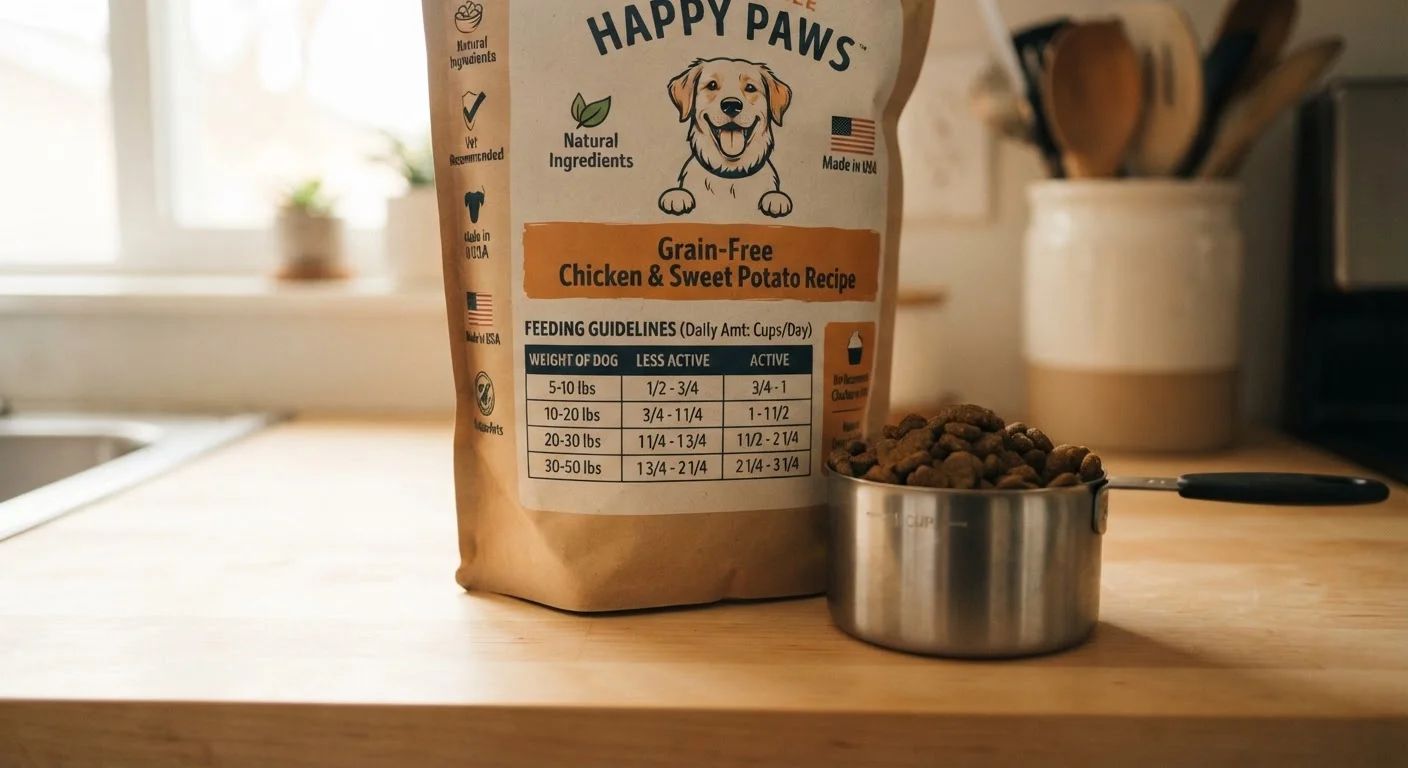
Feeding guidelines printed on pet food packaging are formulated by the manufacturer based on average caloric needs for animals in a given weight range. They are not personalized recommendations — they reflect population-level estimates designed to prevent obvious underfeeding or overfeeding for a typical pet of that size.
Think of them the way you might think of a general serving suggestion on a box of cereal: useful context, but not a rule calibrated to you specifically. As you become a more confident owner, you'll learn to use these numbers as a baseline and adjust from there. Our guide to common feeding assumptions vets often correct explores several myths that stem from reading guidelines too literally.
Feeding guideline
A manufacturer's suggested daily food amount, based on average caloric needs for a pet of a given weight. It is a starting estimate, not a tailored prescription.
Caloric density
The amount of energy (measured in kilocalories) contained in a specific volume or weight of food. Higher-density foods deliver more calories per cup or gram.
Body condition score (BCS)
A standardized scale vets use to assess whether a pet's weight is appropriate by evaluating visible and palpable body fat relative to muscle.
Life stage formula
A pet food formulated for a specific phase of life — puppy/kitten, adult, or senior — with nutrient levels adjusted to match that stage's physiological needs.
Daily caloric intake
The total calories a pet consumes in one day from all sources, including main meals, treats, and any food used for training.
How to Read the Numbers on the Label
Most feeding charts list a daily amount keyed to your pet's current body weight. The first step is confirming the unit of measurement — some labels use cups, others use grams or ounces. A standard US measuring cup and a kitchen scale will give you different results for the same kibble, so matching the right tool to the label matters.
Also check whether the amount listed is a daily total or a per-meal portion. Dividing the daily total across two or three meals is generally preferable to a single large feeding for dogs, and many cats do well with multiple small meals as well.
Caloric density — usually expressed as kilocalories per cup or per kilogram — tells you how energy-rich the food is. Two foods with identical cup-based guidelines may deliver very different calorie counts if their densities differ. This figure is typically listed in the product's nutritional information panel. For a deeper look at how to evaluate what's actually in your pet's food, see our guide on reading a pet food ingredient list.
Use a Kitchen Scale for Accuracy
Measuring by weight is more consistent than scooping by cup, since the same measuring cup can hold varying amounts of kibble depending on piece size and shape. A basic digital kitchen scale costs very little and significantly improves portion accuracy over time.
Factors That Change How Much Your Pet Needs
A pet's actual caloric requirement depends on several variables the packaging cannot account for individually:
- Age and life stage: Puppies and kittens need more calories relative to body weight than adults. Senior pets often need fewer, though this depends on health status.
- Activity level: A working dog or an outdoor cat burns considerably more energy than a sedentary indoor pet of the same weight.
- Reproductive status: Intact animals, pregnant females, and nursing mothers have distinct nutritional demands that differ meaningfully from spayed or neutered pets.
- Health conditions: Certain medical conditions — kidney disease, diabetes, food sensitivities — require tailored nutrition. Always consult your veterinarian before adjusting portions for a pet with a diagnosed condition.
- Current body condition: If your pet is underweight or overweight, feeding to their ideal weight rather than their current weight is a common approach, but this should be guided by a vet.
Don't Adjust Portions for Health Conditions Alone
If your pet has a diagnosed condition such as kidney disease, diabetes, or obesity, do not rely solely on package guidelines to determine feeding amounts. These situations require veterinary guidance to ensure nutritional needs are met safely and the condition is properly managed.
Body condition scoring (BCS) is one of the most reliable at-home tools for gauging whether portions are appropriate. A pet at an ideal condition will have ribs that are easily felt but not visually prominent, a visible waist from above, and a slight abdominal tuck from the side.
Putting It Into Practice
Start with the guideline on the packaging, then observe your pet over two to four weeks. Weigh them at consistent intervals and assess body condition regularly. If weight is creeping up, reduce the portion modestly — typically by 10% — and reassess. If your pet seems lethargic, is losing weight, or shows changes in coat or digestion, consult your veterinarian rather than making large dietary adjustments on your own.
Don't forget to account for treats and any food used in training — these add to the daily caloric total. Our companion piece on evaluating a new pet food provides a practical checklist if you're also considering a food switch.
If you've just brought a new pet home, feeding routines are part of a broader first-week setup. See our first-week health and safety checklist for a comprehensive starting framework. And for ongoing general care guidance, the Pet Health & Care hub is a reliable reference as your confidence grows.
This article is for general informational purposes only and is not a substitute for personalized veterinary advice. Always consult a qualified veterinarian regarding your individual pet's nutritional needs.