

Key Takeaways
- Dental disease is one of the most common health problems in dogs and cats, affecting most pets by age three.
- Bacteria from infected gums can enter the bloodstream and affect the heart, kidneys, and liver.
- Professional dental cleanings require anesthesia — any claim otherwise is considered unsafe by veterinary organizations.
- Home care, including tooth brushing, meaningfully slows plaque and tartar buildup between vet visits.
- Bad breath in pets is not normal — it is often an early sign of dental disease worth investigating.
Pet Dental Disease
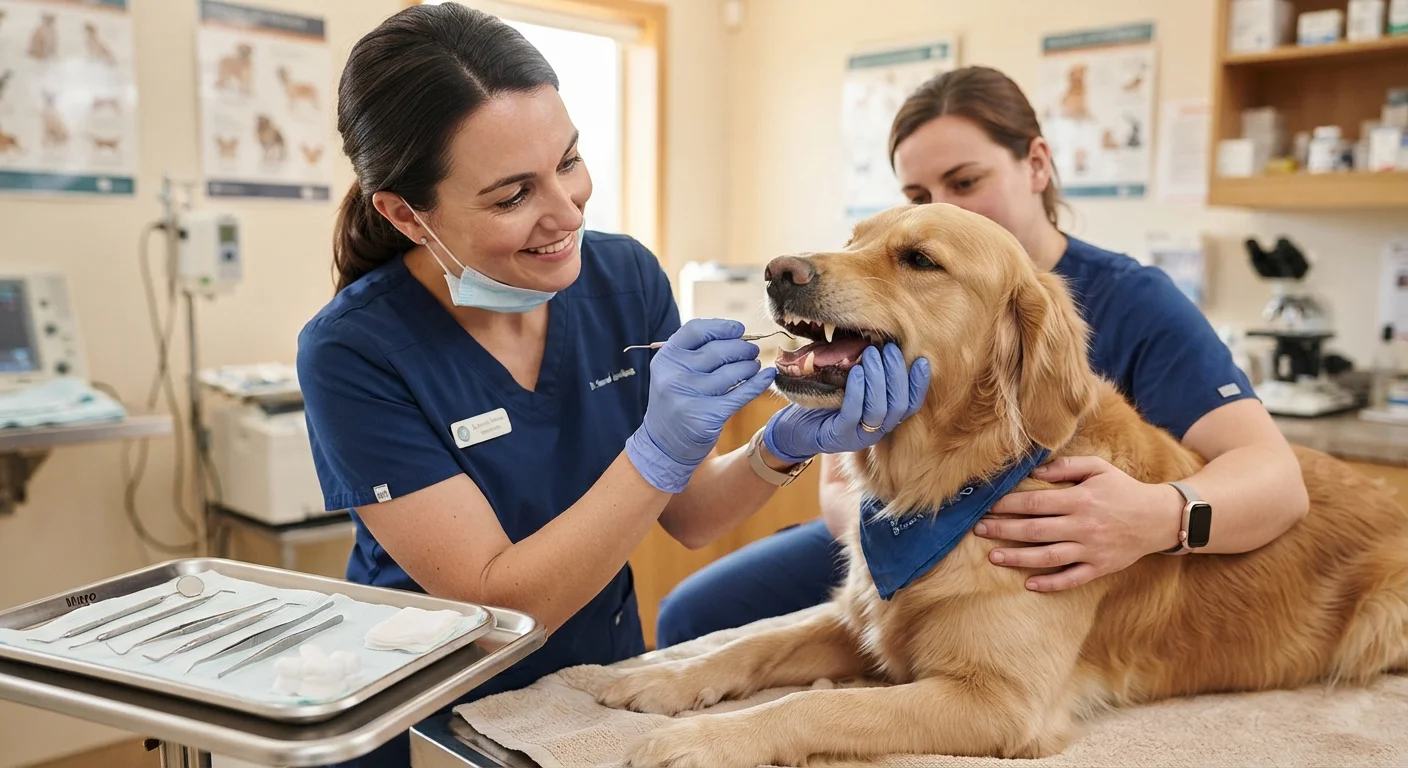
Pet dental disease — most commonly periodontal disease — is an infection and inflammation of the structures surrounding the teeth, including the gums and supporting bone. It begins with plaque buildup, hardens into tartar, and can progress to gum recession, tooth loss, and chronic pain. It is estimated to affect the majority of dogs and cats by age three.
Periodontal disease is graded on a scale from 1 (early gingivitis) to 4 (severe bone loss and tooth destruction), with Grades 3–4 typically requiring professional dental extractions under anesthesia.
More Than a Cosmetic Concern
Many pet owners assume that slightly yellow teeth or mild bad breath are just facts of life for dogs and cats. In reality, both are early warning signs of a progressive disease that, left unaddressed, can cause chronic pain, tooth loss, and systemic damage to internal organs.
Periodontal disease — infection and inflammation of the gum tissue and supporting bone — is among the most frequently diagnosed conditions in companion animals. The American Veterinary Medical Association notes that the majority of dogs and cats show signs of dental disease by age three. What makes this particularly concerning is how quietly it progresses: many pets continue eating and behaving normally even when experiencing significant oral discomfort.
Understanding what dental disease actually involves helps owners move from passive concern to informed action — and that starts with knowing what's really happening below the gumline. See our guide to what annual vet exams cover for more on how dental assessments fit into routine wellness care.
~80%
Dogs showing dental disease signs by age 3
According to the American Veterinary Medical Association, the majority of dogs and cats develop some form of dental disease by their third year of life.
Grade 1–4
Standardized scale for periodontal severity
Veterinary dentists classify periodontal disease on a four-point scale; Grades 3 and 4 typically require professional extractions and carry a higher risk of systemic involvement.
Daily
Ideal tooth-brushing frequency for pets
Veterinary dental guidelines recommend daily brushing as the gold standard for home oral care, with meaningful benefit seen even at three to four times per week.
How Dental Disease Progresses — and Where It Goes
The process begins simply: saliva, bacteria, and food debris combine to form plaque on tooth surfaces. Without removal, plaque mineralizes into tartar (calculus) within days. Tartar cannot be brushed away and provides a rough surface where more bacteria accumulate, including below the gumline — a space veterinarians call the subgingival pocket.
Bacteria in this pocket trigger an immune response, inflaming and eventually destroying the gum tissue and underlying bone. As the disease advances, teeth loosen and may need to be extracted. But the damage does not stay local.
Bacteria from infected gum tissue can enter the bloodstream — a process called bacteremia. Research in veterinary medicine has linked severe periodontal disease in pets to changes in kidney, liver, and cardiac function. The heart valves are particularly vulnerable, as circulating bacteria may adhere and contribute to endocarditis or other structural changes over time. This is why many veterinarians now frame dental care as cardiovascular and renal care, not just oral hygiene. For pets already managing organ-related conditions, see our article on nutrition for pets with chronic conditions.
“Periodontal disease is the most common clinical condition occurring in adult dogs and cats, and is entirely preventable. By three years of age, most dogs and cats have some evidence of periodontal disease.”
— American Veterinary Dental College, Governing body for veterinary dental specialists in the United States
What Professional Dental Cleaning Actually Involves
A professional veterinary dental cleaning is a medical procedure, not a grooming service. It is performed under general anesthesia — a requirement that surprises some owners but is essential for both safety and effectiveness.
Anesthesia allows the veterinarian or veterinary dentist to clean below the gumline where disease is most active, take dental radiographs (X-rays) to assess bone loss and root health invisible to the eye, probe each tooth individually for pocket depth, and extract teeth that are non-viable without causing distress. Anesthesia-free cleanings, offered by some non-veterinary providers, can only address visible surfaces and are considered inadequate — and potentially harmful — by the American Veterinary Dental College.
Pre-anesthetic bloodwork is typically recommended, especially in older pets, to confirm that the kidneys and liver can safely process anesthetic agents. Your vet will discuss what the procedure entails and what to expect during recovery. Most pets return to normal within 24 hours.
Ask About Dental Radiographs
Dental X-rays reveal disease below the gumline that is invisible during a visual exam — including bone loss, tooth root abscesses, and tooth resorption in cats. If your vet does not routinely take dental radiographs during cleanings, it is worth asking whether they are available and appropriate for your pet's situation.
Home Care: What Actually Works
Professional cleanings address existing disease, but consistent home care is what slows its return. The single most effective home intervention is daily tooth brushing using a pet-formulated toothpaste. Human toothpaste contains fluoride and xylitol — both toxic to animals — and should never be used.
Introducing brushing gradually, using positive reinforcement, makes the process manageable for most pets. Starting in puppyhood or kittenhood helps enormously, but adult pets can learn to tolerate it with patience. Even brushing three to four times per week provides meaningful benefit compared to no brushing at all.
For pets who resist brushing entirely, veterinary-approved dental chews, water additives, and prescription dental diets can provide supplemental benefit. Look for products carrying the Veterinary Oral Health Council (VOHC) seal, which indicates the product has met peer-reviewed standards for plaque or tartar reduction. These are adjuncts, not substitutes, for professional care.
Diet and chewing behavior also play a role. What pets eat matters beyond dental health — certain soft or sugary foods can accelerate plaque formation, while appropriate chew toys encourage mechanical cleaning of tooth surfaces. Discuss options with your veterinarian based on your pet's age, size, and health status.
This article is for general informational purposes only and is not a substitute for professional veterinary advice. Always consult a licensed veterinarian regarding your pet's dental health and treatment options.