

Key Takeaways
- Sentimental items are hard to release because they feel emotionally tied to people, relationships, or life chapters.
- The memory and the object are not the same thing — preserving one does not require keeping the other.
- Digitizing, repurposing, or curating a small 'memory collection' are practical middle-ground approaches.
- Guilt and obligation are common drivers of sentimental clutter, especially with inherited or gifted items.
- Decluttering sentimental items works best done slowly, in short sessions, with clear personal criteria.
Sentimental Clutter
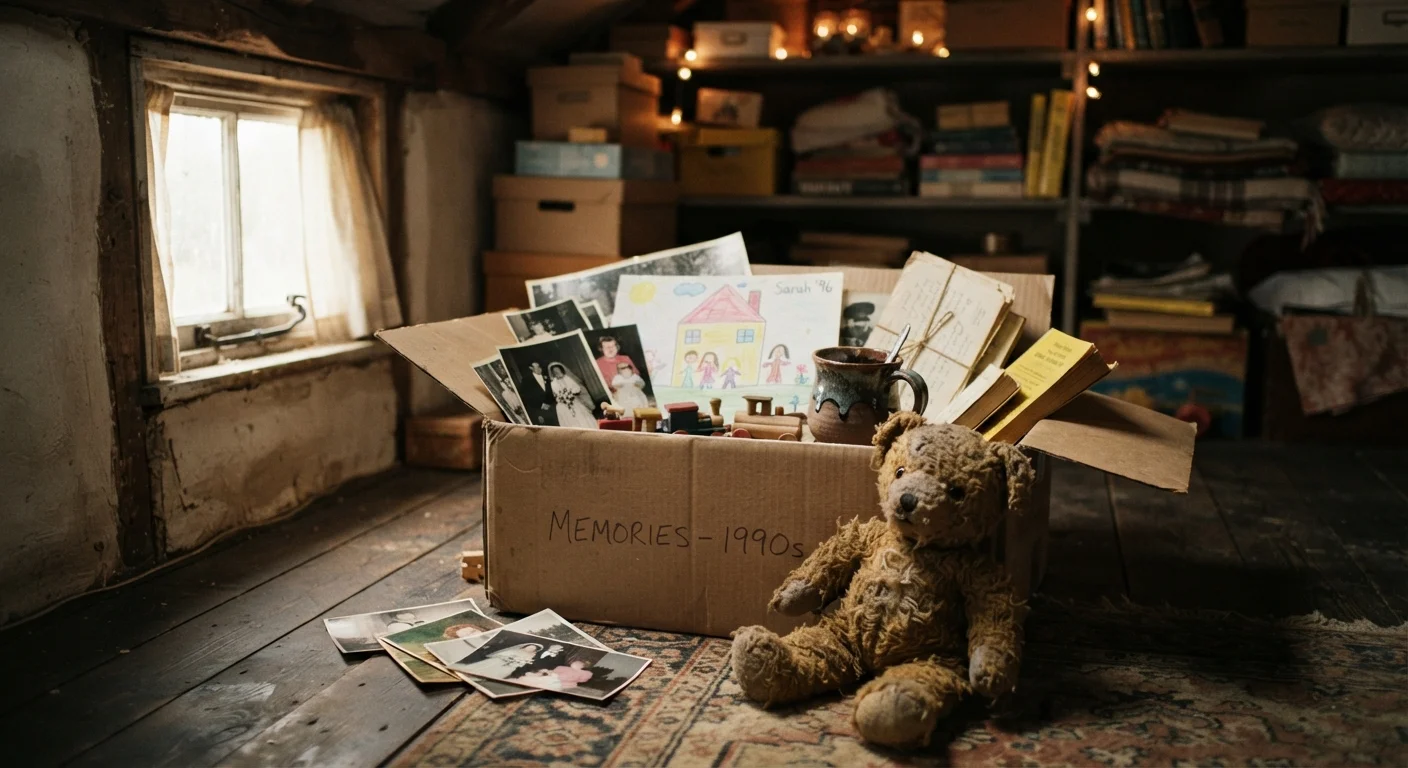
Sentimental clutter refers to physical objects kept primarily because of the memories or emotions they represent, rather than their practical use or aesthetic value. These items — gifts, heirlooms, children's artwork, mementos — are uniquely difficult to part with because discarding them can feel like discarding the memory itself. Unlike everyday clutter, sentimental clutter involves a psychological layer that makes standard decluttering advice feel inadequate.
Researchers who study material attachment describe this phenomenon as 'object-self integration' — the degree to which a possession becomes embedded in a person's sense of identity or life story.
Why Sentimental Items Resist Ordinary Decluttering Logic
Most decluttering advice follows a simple framework: keep what you use, release what you don't. That logic works reasonably well for kitchen gadgets or old magazines. It breaks down almost immediately when applied to a parent's handwriting on a birthday card, a child's first drawing, or a piece of jewelry from someone no longer living.
The difficulty isn't organizational — it's emotional. Sentimental objects function as anchors to specific people, relationships, and chapters of life. Parting with them can trigger genuine grief, guilt, or anxiety. That response is not a flaw in your thinking; it reflects how meaning-making works. The challenge is learning to distinguish between an object's actual value in your life today and the emotional weight it carries from the past.
Memory and Object Are Not the Same
A common fear behind sentimental clutter is that releasing an item means losing the memory. Research on autobiographical memory suggests this is generally not the case — memories are stored mentally and are not dependent on physical triggers to survive. Photographs, journaling, or simply talking about a person or period can sustain memories long after associated objects are gone.
For households navigating these decisions together, it helps to recognize that people have very different thresholds for what feels worth keeping. See strategies for shared spaces when partners or family members disagree about what to hold onto.
Common Drivers of Sentimental Clutter
Understanding why you're keeping something is more useful than deciding whether it sparks joy in the abstract. Several distinct motivations tend to underlie sentimental clutter:
- Guilt: Keeping a gift you never liked because discarding it feels like rejecting the giver's love or effort.
- Obligation: Holding onto inherited items because letting them go feels disrespectful to the person who owned them.
- Identity preservation: Keeping trophies, yearbooks, or childhood items as proof of who you once were.
- Anticipated regret: Fear that you'll wish you had kept something once it's gone.
- Proxy grief: Holding onto a deceased person's belongings because releasing them feels like losing the person again.
Each of these motivations is legitimate. Naming which one applies to a specific item can make the decision clearer — and more compassionate toward yourself.
~54%
Adults who say clutter causes stress
A survey conducted by the National Association of Productivity and Organizing Professionals found that a majority of respondents cited clutter as a significant source of daily stress.
3 in 10
People who keep items out of guilt
Consumer research on household clutter consistently finds that guilt — particularly around gifts and inherited items — is among the most commonly cited reasons for keeping unwanted possessions.
Practical Approaches That Actually Help
There's no single correct method for handling sentimental items. The following approaches give you a set of tools to work with depending on the object and what it means to you:
Digitize, don't discard
Photographs, children's artwork, handwritten letters, and paper documents can be scanned or photographed at high resolution. The memory is preserved; the physical space is freed. This works especially well for items stored in boxes you rarely open. For guidance on handling paper accumulation more broadly, see managing paper clutter at home.
Repurpose meaningfully
A parent's shirt can become a quilt square. A collection of vintage buttons can become framed art. Transforming an item into something used or displayed preserves the sentiment while reducing the pile.
Create a curated memory collection
Set a physical boundary — one box, one shelf, one drawer — and allow yourself to keep what fits. This isn't about ruthless minimalism; it's about making intentional choices rather than defaulting to keeping everything.
Photograph before releasing
If you decide to let something go, photograph it first. Many people find this provides enough closure that the physical item no longer feels necessary.
Try the 'Future Self' Test
When you're uncertain about a sentimental item, ask: 'Will I realistically look at or use this in the next five years?' If the honest answer is no, it may be stored out of guilt rather than genuine attachment. This question separates items you treasure from items you're simply afraid to release.
How to Pace Yourself Through the Process
Sentimental decluttering should not be rushed. Short, focused sessions of 20 to 30 minutes tend to work better than marathon sorting days, which can lead to decision fatigue and regret. Give yourself permission to set something aside and return to it — this is a legitimate strategy, not avoidance, as long as you actually return.
It also helps to establish personal criteria before you start. Ask yourself: If I came across this for the first time today, would I choose to own it? Or: Am I keeping this for me, or out of guilt? Having a consistent question anchors each decision and reduces second-guessing.
If you're approaching a major life transition — such as moving — sentimental sorting becomes especially important. A room-by-room decluttering checklist can help you work through the full home systematically without overlooking emotionally loaded corners.
For ongoing maintenance after a major clear-out, pairing a curated sentimental collection with a regular editing habit helps prevent re-accumulation. One-in, one-out and seasonal purge strategies both offer structured ways to keep collections from expanding unchecked over time.