

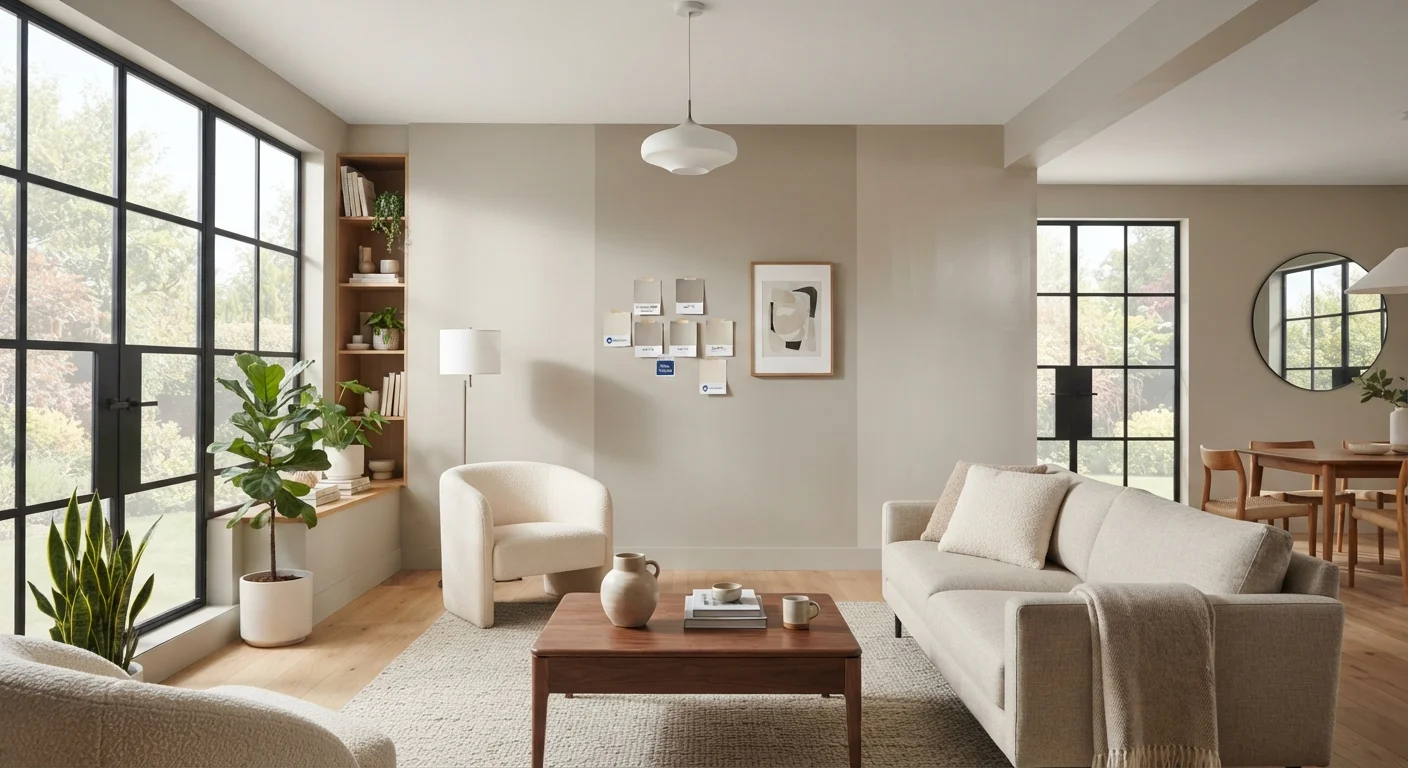
Key Takeaways
- Matte finishes absorb light and hide imperfections, making them ideal for low-traffic areas.
- Eggshell and satin offer a balance of durability and soft light reflection for everyday rooms.
- Semi-gloss and high-gloss finishes reflect the most light and are easiest to clean.
- The same color can look noticeably different depending on which finish you apply.
- Room size, natural light, and surface condition should all inform your finish choice.
Paint Finish (Sheen Level)
A paint finish refers to how glossy or matte a painted surface appears once dry. The level of sheen determines how much light the surface reflects, which directly affects how spacious, bright, or cozy a room feels. Common finishes range from flat/matte at the low end to high-gloss at the top.
Sheen is measured by the angle of light reflectance; higher gloss values indicate a smoother, more reflective film that scatters less light diffusely.
Why Finish Matters as Much as Color
Most homeowners spend considerable time selecting the perfect paint color, but the finish — also called sheen level — can change a wall's entire personality. Apply the same warm greige in flat versus satin, and you'll get two visually distinct results: one that absorbs light quietly and one that bounces it around the room.
Understanding how each finish interacts with light helps you make deliberate choices rather than guessing at the paint counter. The goal isn't just aesthetics; finish also determines how durable and cleanable your walls will be over time.
5
Standard sheen levels in most paint lines
Most major paint manufacturers organize their product lines into flat, eggshell, satin, semi-gloss, and high-gloss categories.
85°
Gloss angle used to measure high-gloss paint
Industry standards typically measure paint sheen using a glossmeter at specified angles; high-gloss products are measured at 85 degrees and can exceed 70 gloss units.
The Finish Spectrum Explained
Paint finishes exist on a continuum from completely non-reflective to highly mirror-like. Here's how each level behaves in a real room:
- Flat / Matte: Absorbs nearly all light, producing a velvety, non-reflective surface. Excellent at hiding surface imperfections like drywall patches or uneven texture. Because it doesn't bounce light, it can make colors appear slightly deeper and spaces feel more intimate. Prone to scuffing and difficult to wipe clean without leaving marks.
- Eggshell: Named for the subtle sheen of an actual eggshell. Reflects a small amount of light, giving walls a soft, lived-in warmth. More washable than flat and a popular choice for bedrooms and living rooms where moderate durability is needed.
- Satin: Noticeably smoother and slightly more reflective than eggshell. Stands up well to cleaning, making it a go-to for hallways, children's rooms, and family gathering spaces. The light it reflects is gentle enough to avoid a plasticky appearance.
- Semi-Gloss: Reflects light clearly and creates definition. Commonly used on trim, doors, and window frames to make architectural details pop. In bathrooms and kitchens, its moisture resistance and wipe-clean surface are practical advantages.
- High-Gloss: The most reflective option available. Typically reserved for accent elements — cabinetry, furniture, or a single statement wall — because it amplifies every surface imperfection and can feel visually overwhelming across large areas.
Sample Both Color and Finish Together
When ordering sample pots, specify the exact finish you intend to use — not just the color. The same paint color in flat versus satin can look like two entirely different shades under the same lighting. Viewing the actual finish on your wall before committing saves costly repaints.
How Light and Room Conditions Should Guide Your Choice
No finish works universally well in every situation. Consider these room-specific factors before committing:
Natural Light
North-facing rooms receive cooler, indirect light throughout the day. An eggshell or satin finish in a warm hue can counteract that coolness by adding gentle reflectivity. South-facing rooms with abundant sunlight can handle matte finishes without feeling dim — the natural brightness compensates for lower reflectance.
Surface Condition
Higher-gloss finishes reveal flaws mercilessly: nail pops, seams, and roller texture all become visible under raking light. If your walls have imperfections you can't fully repair, a flat or eggshell finish will conceal them far better than satin or semi-gloss.
Room Function and Traffic
High-traffic spaces — mudrooms, kitchens, kids' playrooms — benefit from satin or semi-gloss because these finishes tolerate scrubbing. Low-traffic areas like formal dining rooms or adult bedrooms can safely use the more delicate flat or eggshell options.
Just as the finish you choose affects how a room feels, so do the organizational choices within it. For example, when deciding between open shelving or closed storage, the visual weight of your walls plays a supporting role in the overall atmosphere.
Practical Steps for Choosing and Applying a Finish
Approach your finish selection the same way you would a color decision — with samples and patience.
- Test before committing. Paint a large swatch (at least 12 × 12 inches) of your chosen color in both your top two finish options. Observe it at different times of day and under artificial lighting.
- Assess your walls honestly. Run a flashlight at a low angle across the surface. Any bumps, patches, or roller stipple will be amplified by glossier finishes.
- Match finish to function. Use the finish spectrum as a practical guide: matte and eggshell for low-traffic rooms, satin and semi-gloss where cleaning matters.
- Prep and prime appropriately. Switching from a high sheen to a low sheen (or vice versa) requires proper sanding and priming to ensure even adhesion and consistent appearance.
- Apply with the right tools. High-nap rollers work well for matte paints on textured walls; smooth rollers reduce stipple on satin and semi-gloss surfaces.
Finish Names Vary by Manufacturer
Terms like 'eggshell,' 'satin,' and 'low-lustre' are not standardized across all paint brands. One company's satin may fall closer to another's eggshell in actual sheen level. Always check the sheen scale or gloss value printed on the can rather than relying on the name alone.