

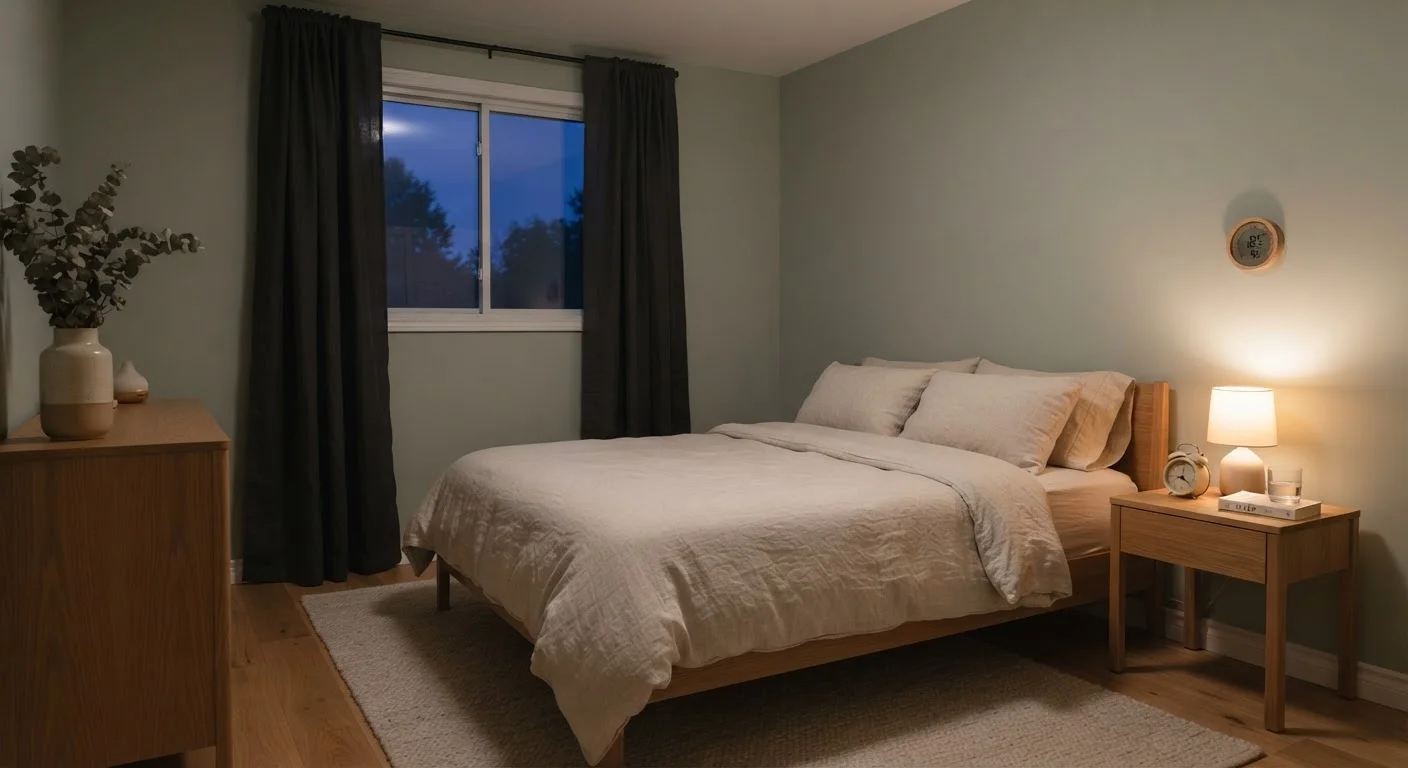
Key Takeaways
- Room temperature between 65–68°F supports the core body temperature drop needed for sleep onset.
- Even low-level light exposure during sleep can disrupt melatonin production and sleep quality.
- Noise above 40 decibels at night is associated with fragmented sleep in research settings.
- Your sleep surface and pillow alignment affect deep sleep comfort and morning recovery.
- Auditing your bedroom systematically is more effective than changing one variable at a time.
What you will need
Why Your Bedroom Environment Shapes Sleep at the Biological Level
Sleep is not simply a behavior you choose — it is a biological state your body is guided into by a cascade of hormonal and neurological signals. Many of those signals are directly responsive to environmental conditions. Understanding this connection is the first step toward making changes that actually stick.
The circadian system — sometimes called the body clock — is entrained primarily by light. Bright or blue-spectrum light in the hours before bed suppresses melatonin, the hormone that signals nighttime to your brain. Temperature follows a parallel pathway: as evening progresses, the body begins dissipating heat from the skin, triggering the core temperature drop that precedes sleep onset. A hot or poorly ventilated room can stall this process entirely.
Noise operates differently. Rather than preventing sleep onset outright, unpredictable sounds cause microarousals — brief, partial awakenings the sleeper may not consciously recall but that interrupt the normal cycling through sleep stages. For a deeper look at how those stages function, see what actually happens inside each sleep stage.
The bedroom audit in this guide is structured around these biological levers: light, temperature, sound, surface comfort, air quality, and behavioral conditioning of the space. Addressing all of them — rather than just the most obvious one — produces compounding improvements.
This Is General Information, Not Medical Advice
The guidance here addresses common environmental factors that influence sleep for healthy adults. If you experience persistent sleep difficulties, excessive daytime sleepiness, or suspect a sleep disorder, consult a qualified healthcare professional before making significant changes to your routine or environment.
What You Need Before You Begin
This walkthrough requires no specialist equipment to complete at a basic level, though a few inexpensive tools make the audit more precise. Gather what you have access to, then work through the steps in sequence.
What you will need
Blackout curtains or a sleep mask
Blocks ambient and early-morning light that can suppress melatonin and cause premature waking.
Programmable thermostat or fan
Allows you to set or maintain a cooler bedroom temperature aligned with sleep-onset physiology.
White noise machine or earplugs
Masks unpredictable environmental sounds that can fragment sleep across the night.
Lux meter app (smartphone-based)
Measures light levels in your bedroom so you can identify problematic sources before and during sleep.
Hygrometer
Monitors bedroom humidity, which affects breathing comfort and sleep quality when levels are too high or too low.
Stack Changes Gradually for Best Results
Rather than overhauling your bedroom overnight, implement one or two changes per week and note any differences in how rested you feel. Gradual adjustments make it easier to identify which factors have the greatest impact on your personal sleep quality.
Step-by-Step: Auditing and Improving Your Sleep Environment
Work through each factor below methodically. If you share your bedroom with a partner, involve them in the process — agreed-upon changes are far more likely to be maintained than unilateral ones. Track how you feel after each week of changes rather than expecting immediate results.
Audit your light environment
Stand in your bedroom at your usual bedtime and allow your eyes to adjust for two minutes. Note every visible light source: streetlights through curtains, standby LEDs on electronics, hallway light under the door, or a charging phone screen. Even low-intensity light — particularly in the blue-white spectrum — can blunt melatonin secretion and delay sleep onset.
Install blackout curtains or a well-fitted roller blind. Cover or remove LED indicator lights using electrical tape or small adhesive covers. Place your phone face-down or in another room entirely.
Set a sleep-supportive temperature
Your core body temperature needs to drop by roughly 2–3°F to initiate and sustain sleep. A bedroom that is too warm interferes with this process, leading to more frequent waking and less deep, slow-wave sleep. Most adults sleep best in a room between 65 and 68°F (18–20°C), though individual preference varies slightly.
If you share a bed with a partner who has a different thermal preference, consider separate lightweight blankets rather than one shared duvet, which allows each person to regulate independently.
Reduce and mask disruptive noise
Assess noise at the time you go to sleep and during early morning hours, when sounds are often louder relative to ambient background. Common offenders include traffic, neighbors, HVAC systems, and household appliances. Unlike steady background sounds, unpredictable or intermittent noises — a car alarm, a door closing — are particularly effective at fragmenting sleep architecture.
A white noise machine or a fan set to low generates a consistent sound floor that reduces the perceptual contrast of sudden sounds. If noise is severe, foam or silicone earplugs remain one of the most effective low-cost solutions.
Evaluate your sleep surface and pillow
Your mattress and pillow should keep your spine in a neutral alignment in your preferred sleep position. Side sleepers typically need a thicker, firmer pillow to fill the gap between shoulder and ear; back sleepers generally benefit from a flatter profile that prevents neck flexion. Stomach sleeping places strain on the cervical spine and is generally discouraged by sleep medicine clinicians.
If you wake with stiffness or discomfort that resolves within an hour, your surface may be contributing. A mattress topper can modify firmness without replacing the full mattress.
Control humidity and air quality
Bedroom humidity between 40–60% supports comfortable breathing. Air that is too dry can irritate airways and worsen snoring; air that is too humid promotes dust mite and mold growth, both of which can affect respiratory health during sleep. A basic hygrometer, available at most hardware stores, tells you where your room sits.
If humidity is low, a cool-mist humidifier placed away from your bed can help. Ensure good ventilation by cracking a window when outdoor air quality allows, or using an air purifier with a HEPA filter if allergens are a concern.
Establish the bedroom as a sleep-only space
The brain is highly context-sensitive. When the bedroom is associated with work, screens, or stimulating activity, the cognitive arousal linked to those behaviors can persist at bedtime. Sleep medicine research consistently supports reserving the bed for sleep (and intimacy) only — a principle known as stimulus control.
Move laptops, work materials, and televisions out of the room if possible. If your living space makes this difficult, create a clear visual and behavioral boundary: close a laptop lid and store it on a shelf, dim lighting, and follow a consistent wind-down sequence before getting into bed. See also: evidence-informed evening wind-down habits that complement these environmental changes.
For a broader view of how your daily habits — from morning light exposure to evening routine — interact with your sleep environment, this complete overview of sleep health provides helpful context. And if you've noticed that your sleep has shifted over the years, how sleep patterns change across adulthood may explain why.
This article provides general health information for educational purposes and is not a substitute for professional medical advice. If you have ongoing sleep difficulties or suspect a sleep disorder, speak with a qualified healthcare provider.