

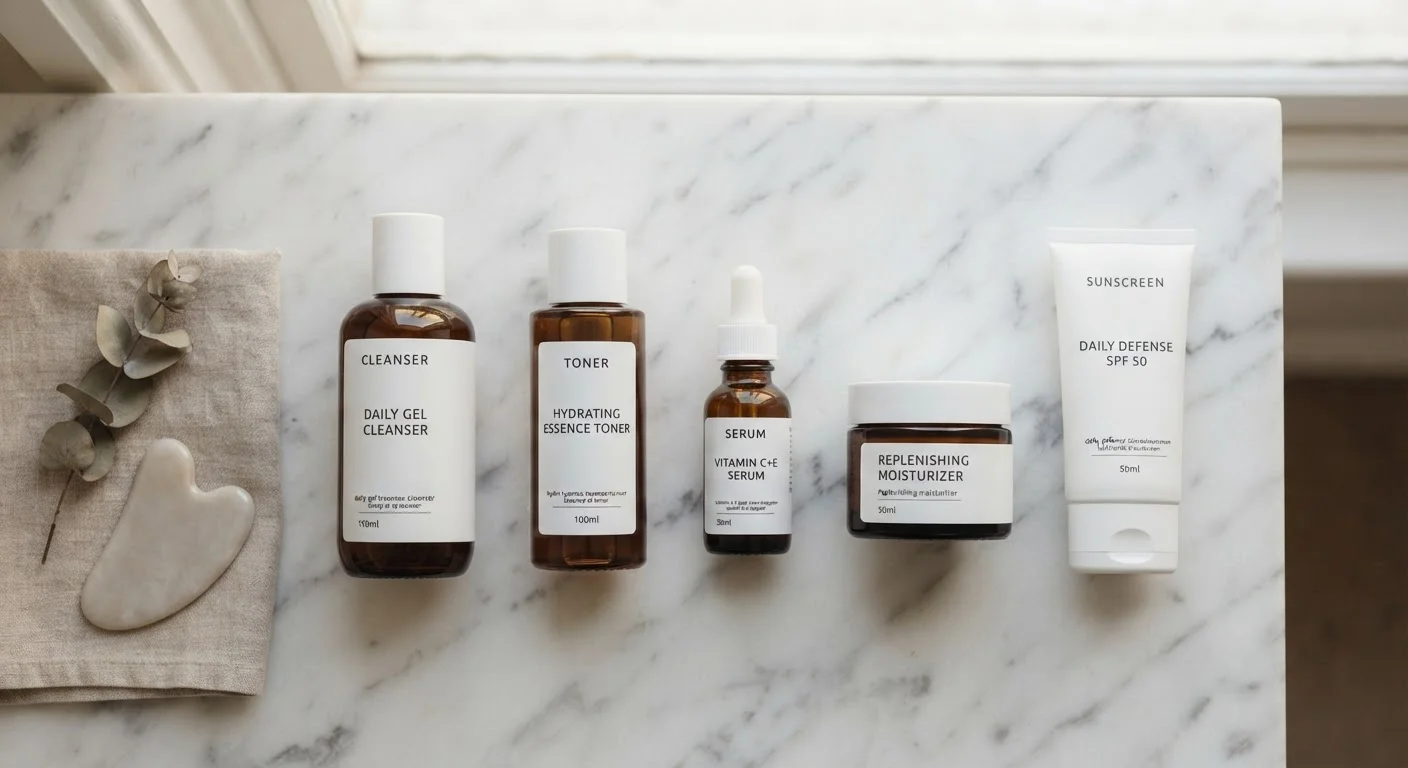
Key Takeaways
- Apply skincare from thinnest to thickest consistency to maximise absorption.
- Water-based products go on before oil-based ones; oils block water-soluble actives.
- Sunscreen is always the final daytime step — nothing goes on top of it.
- Active ingredients like vitamin C and retinol need direct skin contact to work effectively.
- Waiting 30–60 seconds between layers helps each product settle without pilling.
What you will need
Why Layering Order Matters
Skincare layering isn't ritual for its own sake — it's practical chemistry. Each product in your routine has a different molecular size, pH, and base (water or oil), and those properties determine how well it penetrates and how it interacts with what comes after it.
The governing principle is straightforward: apply from thinnest to thickest consistency, and keep water-based products before oil-based ones. Oils create a hydrophobic barrier that water-soluble actives cannot easily cross, so inverting the order can prevent ingredients from reaching the skin layers where they're intended to work.
pH is a secondary consideration. Some actives — particularly AHAs and BHAs — function within a specific acidic pH range. Applying an alkaline product immediately before them can neutralise that environment and reduce efficacy. If you use exfoliating acids, apply them directly after cleansing and toning, before other serums.
Damp Skin Boosts Humectant Performance
Applying hyaluronic acid and other humectants to slightly damp skin — not soaking wet — helps them draw moisture into the upper layers of the epidermis more efficiently. Pat your face mostly dry after cleansing, then apply your toner or hydrating serum within 60 seconds for best results.
For readers newer to routine-building, our guide on building a minimal skincare routine covers which steps are truly essential.
How to Build Your Layering Sequence
The steps below outline the standard recommended layering order for both morning and evening routines. Not every step will apply to every person — a functional routine can involve as few as three products. The sequence logic, however, remains the same regardless of how many products you use.
What you will need
Gentle Facial Cleanser
Removes surface impurities and prepares skin to absorb subsequent products.
Toner or Essence
Rebalances skin pH and delivers light hydration before serums are applied.
Treatment Serum
Delivers concentrated active ingredients directly to skin before heavier products.
Moisturiser
Seals in previous layers and provides lasting hydration and barrier support.
Facial Oil
Adds lipid-based nourishment and occlusion; applied after moisturiser in most routines.
Broad-Spectrum Sunscreen (SPF 30 or higher)
Protects skin from UV damage; the non-negotiable final step in any morning routine.
Cleanse to create a clean canvas
Start every routine — morning or evening — with a cleanser suited to your skin type. Cleansing removes sebum, residual products, and environmental particulates that would otherwise sit between your skin and your actives, reducing absorption. Use lukewarm water; hot water disrupts the skin's natural lipid barrier.
Apply toner or essence
If your routine includes a toner or hydrating essence, apply it now on slightly damp skin using clean hands or a cotton pad. Toners restore the skin's slightly acidic pH after cleansing and prime the surface for better serum absorption. Look for pH-balanced formulas without high concentrations of alcohol, which can be drying.
Layer your serums, thinnest first
Serums are the workhorse step — this is where active ingredients such as vitamin C, niacinamide, or hyaluronic acid make contact with skin. If you use more than one serum, apply the thinnest, most watery formula first. Press each one gently into the skin rather than rubbing, and allow 30–60 seconds between layers to prevent pilling and ensure each product settles.
Active ingredients require direct skin contact to function. Applying them over a heavier moisturiser creates a barrier that limits penetration — always place them closer to the skin in your layering sequence.
Apply eye cream (if used)
Eye creams are typically lighter in consistency than face moisturisers and formulated for the delicate periorbital skin. Apply before your main moisturiser so the thinner formula isn't blocked by a heavier layer. Use your ring finger to tap — not rub — a small amount along the orbital bone, not directly on the eyelid.
Seal with moisturiser
Moisturiser serves two purposes: it provides its own hydrating or barrier-repairing ingredients, and it helps lock in the layers beneath. Apply after serums have had a moment to absorb. For guidance on choosing the right formula for your skin type, see our article on common moisturiser misunderstandings.
Add facial oil (evening or dry skin only)
Facial oils are lipophilic — they repel water. Applied before water-based products, an oil would physically prevent them from reaching the skin. Always layer oils after your moisturiser, not before. Because oils create a semi-occlusive seal, they work particularly well in evening routines or for skin that is chronically dry.
Finish with sunscreen (morning only)
Sunscreen is the final morning step without exception. Both mineral (physical) and chemical sunscreens need to sit on top of all other products to do their job. Apply a generous, even layer to the face and neck. For the science behind why daily SPF matters, see our article on daily sunscreen use.
Don't Mix Conflicting Actives in One Layer
Some active ingredients interact poorly when applied simultaneously. Retinol and high-concentration vitamin C, for example, can cause irritation on sensitive skin when used together in the same routine step. If you're unsure how your actives interact, consult our field guide to popular actives or speak with a dermatologist.
Sunscreen Goes Last — Every Time
Sunscreen must be the final step in any morning routine. Applying moisturiser, facial oil, or any product on top of SPF dilutes the protective film and reduces its efficacy. For evening routines, skip sunscreen entirely — it serves no function overnight and is not designed for occlusive layering.
If your routine includes fragrance-containing products, be mindful of where they sit in your sequence. Our article on fragrance in skincare covers the considerations worth knowing.
Finally, for readers who want to understand what's actually inside each product before layering it, our ingredient list guide is a practical companion resource.