

Key Takeaways
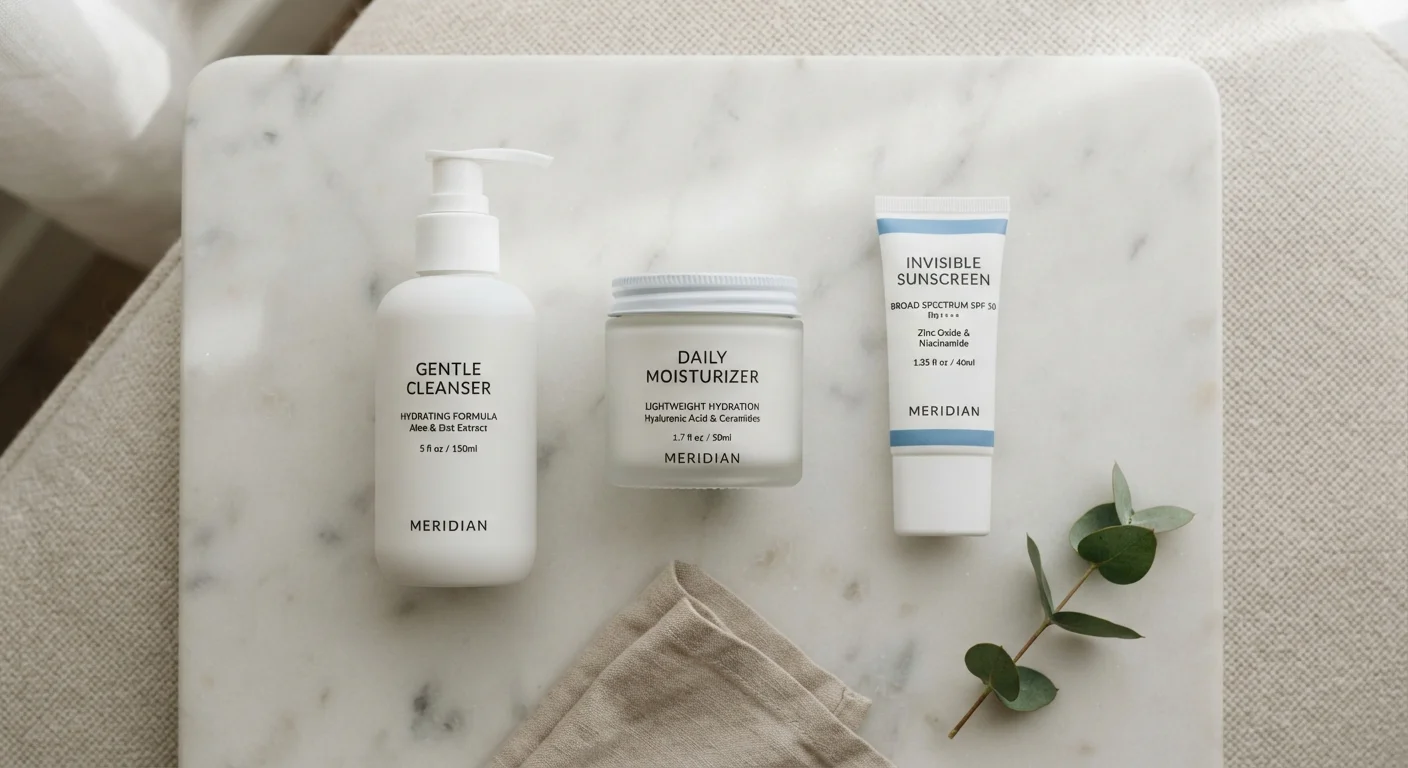
- A three-step routine — cleanse, moisturize, protect — covers the scientific fundamentals of daily skin health.
- Sunscreen is the single most evidence-backed preventive skincare step available without a prescription.
- Over-cleansing is one of the most common reasons beginner routines fail to produce results.
- Consistency over weeks matters far more than using multiple products at once.
- Skin type determines which formulas to choose, not which steps to include.
Start here
Why Minimal Works
Core steps
The Three Core Steps
Personalize
Matching the Routine to Your Skin Type
Troubleshoot
Common Beginner Mistakes to Avoid
Level up
When to Add More (and When Not To)
Why Minimal Works
The skincare industry generates thousands of products annually, and for a beginner, the volume is genuinely overwhelming. What research consistently supports, however, is that skin health is driven by a few reliable mechanisms — barrier protection, hydration, and UV defense — rather than by the size of a product collection.
More products introduce more variables: more potential irritants, more chances for ingredient conflicts, and more room for technique errors. If a 10-step routine breaks you out or causes redness, it's nearly impossible to identify the culprit. A minimal routine eliminates that guesswork.
If you're starting from zero, this complete starting point for adults provides a broader framework for building grooming habits before narrowing in on skin specifically.
Skin barrier
The outermost layer of skin that prevents moisture from escaping and blocks environmental irritants from entering. A healthy barrier is the foundation of calm, resilient skin.
Broad-spectrum SPF
A sunscreen rating that confirms protection against both UVA rays (aging) and UVB rays (burning). The 'SPF' number specifically measures UVB protection only, so 'broad-spectrum' on the label is equally important.
Humectant
An ingredient that draws water from the environment or deeper skin layers toward the skin's surface. Common examples include glycerin and hyaluronic acid.
Occlusive
An ingredient that forms a physical seal on the skin surface to prevent water from evaporating. Petrolatum (petroleum jelly) and shea butter are widely used examples.
Acid mantle
A slightly acidic film on the skin's surface — maintained by sebum and sweat — that protects against bacteria and environmental damage. Harsh cleansers can disrupt this balance.
Non-comedogenic
A term used to indicate that a formula is designed not to clog pores. It's particularly relevant for people with oily or acne-prone skin when choosing moisturizers and sunscreens.
The Three Core Steps
A science-backed minimal routine has three non-negotiable components:
- Cleanse — A gentle, pH-balanced cleanser removes excess sebum, environmental debris, and surface buildup without stripping the skin barrier. Harsh soaps or sulfate-heavy formulas disrupt the acid mantle (the skin's natural protective film), leading to irritation or compensatory oiliness.
- Moisturize — A moisturizer works through three mechanisms: humectants (such as glycerin or hyaluronic acid) draw water into the skin; emollients (such as fatty acids) smooth the surface; and occlusives (such as petrolatum) seal moisture in. Not all moisturizers use all three, but understanding these categories helps you choose intelligently.
- Protect — Broad-spectrum sunscreen is the most evidence-backed anti-aging and skin-health tool available without a prescription. UV radiation is a primary driver of photoaging, uneven tone, and long-term skin damage. SPF 30 or higher, applied daily, is the dermatological standard.
These three steps, applied consistently morning and evening (with sunscreen reserved for AM use), form a complete functional routine for most adults.
Apply Sunscreen as the Final Step
Sunscreen is most effective when it sits on top of your other products, not beneath them. Apply it as the absolute last step in your morning routine, after moisturizer has had a moment to absorb. Give it a few minutes before applying makeup if you wear it, to allow the SPF film to set properly.
Matching the Routine to Your Skin Type
The steps don't change by skin type — only the formulas do. Here's a practical breakdown:
| Skin Type | Cleanser | Moisturizer | Sunscreen Format |
|---|---|---|---|
| Oily | Foaming or gel | Lightweight gel or lotion | Fluid or gel-SPF |
| Dry | Cream or balm | Rich cream with occlusives | Moisturizing SPF formula |
| Combination | Gentle gel or low-foam | Medium-weight lotion | Lightweight broad-spectrum |
| Sensitive | Fragrance-free cream | Minimal-ingredient, fragrance-free cream | Mineral SPF (zinc oxide) |
Sensitive skin deserves particular attention. Fragrance is one of the most common causes of contact dermatitis in skincare, so opting for fragrance-free formulas is a straightforward way to reduce risk. If you're unsure how to evaluate what's in a product, reading an ingredient list is a learnable skill that pays dividends.
Common Beginner Mistakes to Avoid
Most early skincare setbacks don't stem from using too few products — they stem from technique errors. The most frequent include:
- Over-cleansing: Washing the face more than twice daily, or using stripping formulas, damages the skin barrier over time. Signs include tightness, flakiness, or paradoxical oiliness after cleansing.
- Skipping moisturizer on oily skin: Oily skin still needs hydration. Skipping this step often triggers increased sebum production as the skin compensates for perceived dryness.
- Introducing too many products at once: When starting out, add one new product at a time and allow two to four weeks before evaluating results or adding another.
- Applying products in the wrong order: As a rule, apply thinnest to thickest — cleanser first, then any watery treatments, then moisturizer, then sunscreen. For a deeper look, layering products in the right order explains the logic.
For a fuller audit of what goes wrong in common routines, over-cleansing and under-moisturising missteps is worth reading alongside this guide.
Don't Patch-Test? Don't Skip It.
Any new product — even one marketed as gentle or hypoallergenic — can cause a reaction in some individuals. Apply a small amount to the inner forearm or behind the ear for two to three days before using it on your face. This simple step can prevent widespread irritation or allergic contact dermatitis.
When to Add More (and When Not To)
Once your three-step routine is consistent and your skin is stable — neither irritated nor persistently problematic — you may consider adding targeted steps. Common additions include:
- Chemical exfoliants (AHAs like glycolic acid, BHAs like salicylic acid) to address texture, clogged pores, or uneven tone — typically used two to three times per week, not daily.
- Antioxidant serums (vitamin C, niacinamide) applied in the morning to support UV defense and address discoloration.
- Retinoids (vitamin A derivatives) in the evening, introduced slowly, for long-term skin renewal — these warrant their own research before use.
The key principle: add one product at a time, give it four to six weeks, and evaluate before layering on more. The goal is a routine you can maintain indefinitely, not one that's impressive on paper but abandoned within a month.
This article provides general skincare education for informational purposes only and is not a substitute for advice from a licensed dermatologist or healthcare professional. If you experience persistent skin concerns, irritation, or unexpected reactions, consult a qualified professional.