

Key Takeaways
- Weekly grooming audits help you catch skipped steps before they become problem habits.
- Tool hygiene — cleaning brushes, replacing blades — is as important as the grooming steps themselves.
- Hair washing frequency should reflect your hair texture and scalp type, not a universal rule.
- Nail care and exfoliation are among the most commonly overlooked weekly grooming tasks.
- Consistency matters more than perfection — even a partial audit is better than none.
Summary
18 items · 20–40 minutes
Why a Weekly Grooming Audit Actually Matters
Most grooming routines run on autopilot. You follow roughly the same steps each morning or evening, and that consistency is genuinely valuable. But routines also drift — a step gets skipped, a tool goes uncleaned, a product stops working as expected. A brief weekly audit gives you a structured moment to course-correct before small lapses compound into real skin, hair, or nail issues.
This checklist is designed for adults of all backgrounds, hair textures, and skin types. If you want to understand how your morning and evening habits should be structured in the first place, see our guide on what goes in each part of your daily routine. This audit assumes you already have a baseline routine and focuses on what to review each week.
Skin Care Review
Hair and Scalp Check
Nail Care
Tool and Product Hygiene
Tools, Products, and What to Check Before You Start
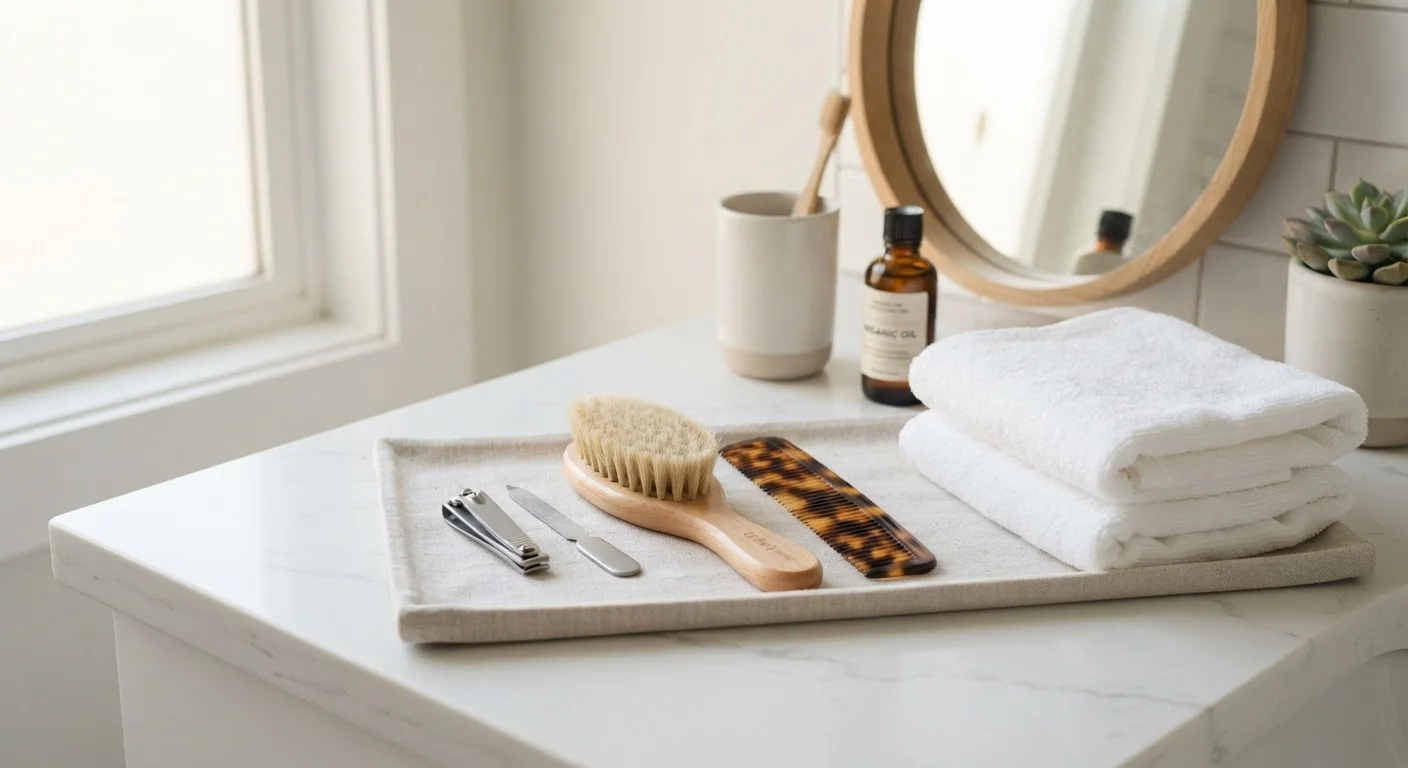
Before running through the checklist, gather your key grooming tools so you can inspect them as you go. A grooming audit that skips tool hygiene is incomplete — dirty brushes redistribute oils and buildup, dull nail tools tear rather than cut, and old razor cartridges increase the risk of irritation and ingrown hairs.
Hairbrush or wide-tooth comb
Used during the audit to check for buildup, assess bristle condition, and detangle as needed.
Nail clippers and nail file
For trimming and shaping nails as part of the weekly nail care review.
Isopropyl alcohol (70%)
For sanitizing reusable grooming tools including tweezers, scissors, and nail clippers.
Mild liquid soap
For washing hairbrushes, combs, and other tools that can be rinsed with water.
Magnifying mirror
Helpful for inspecting skin texture, nail edges, and scalp areas with greater detail.
For a broader look at which habits genuinely move the needle versus which ones quietly cause harm, the article on grooming habits worth adopting — and a few worth dropping is a useful companion read.
Don't Share Personal Grooming Tools
Razors, nail clippers, tweezers, and exfoliating tools should never be shared between individuals. Sharing these items can transfer bacteria, fungi, and in some cases bloodborne pathogens. Always keep your personal grooming tools separate and clearly identified.
Tailoring the Audit to Your Skin Tone and Hair Texture
Generic grooming checklists often assume a narrow default. In practice, the right exfoliation frequency for dry, melanin-rich skin differs from what works for oily or combination skin. Wash-day cadence for tightly coiled hair textures differs significantly from straight or wavy hair, where daily or near-daily washing may be workable. The audit items in this checklist are intentionally flexible — they prompt the question rather than prescribe a single answer.
If you want a more detailed breakdown of how technique and product choices vary across skin tones and hair textures, our article on grooming across skin tones and hair textures covers those distinctions in depth. Similarly, nail care is one of the most commonly skipped components of a weekly routine — see our practical guide on keeping nails clean and well-maintained without a salon visit for a closer look at at-home maintenance.
The Skin & Hair Care hub is also a useful starting point for exploring targeted routines beyond this weekly audit framework.
This article is for general informational and educational purposes only. It is not a substitute for advice from a licensed dermatologist, trichologist, or other qualified health professional. If you are experiencing persistent skin, scalp, or nail concerns, consult a qualified healthcare provider.