

Key Takeaways
- Consistent at-home nail care takes under 20 minutes and requires only basic tools.
- Soaking nails before trimming reduces breakage and makes the process easier.
- Cuticle health matters as much as nail length for an overall polished appearance.
- Filing in one direction prevents splitting, regardless of nail texture or thickness.
- Moisturizing nails and surrounding skin is a step most people skip but shouldn't.
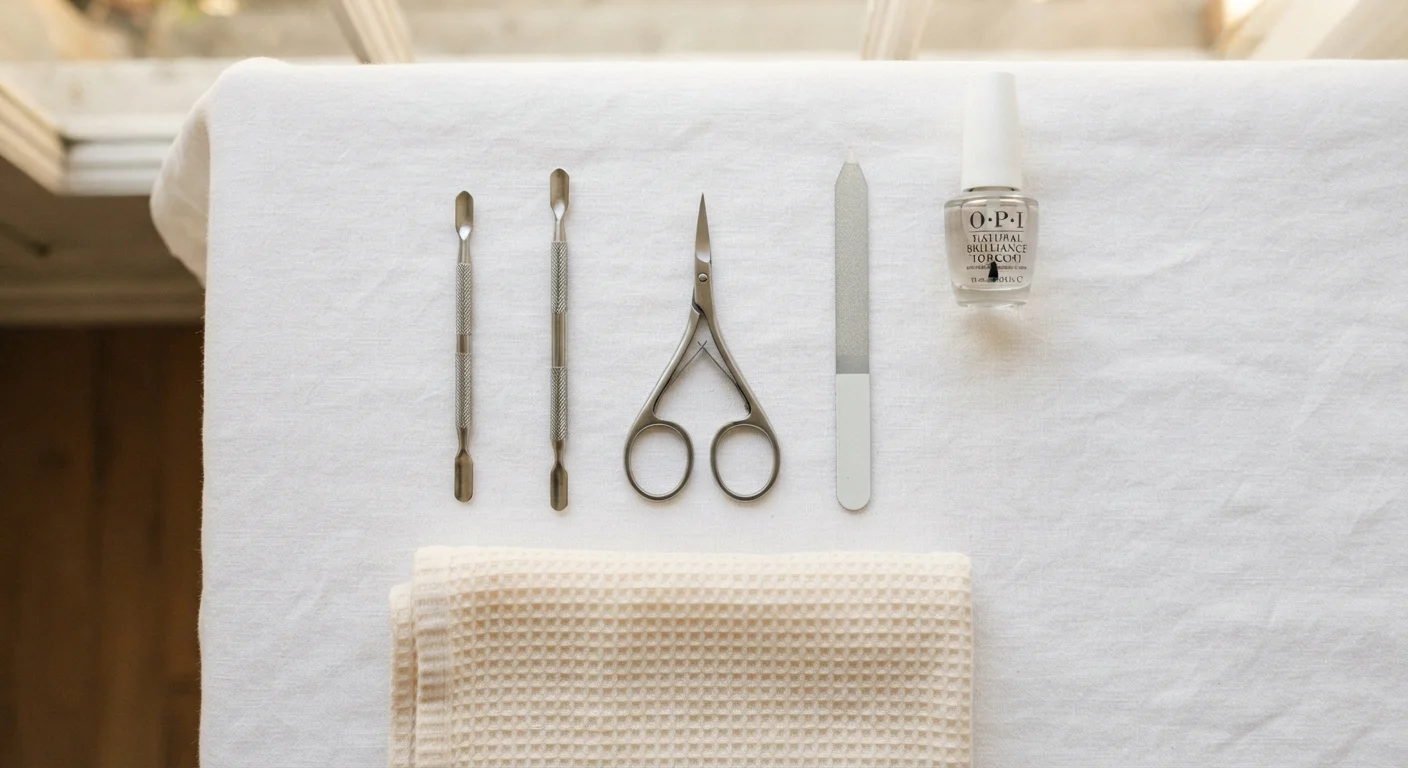
What you will need
Why At-Home Nail Care Is Worth Getting Right
Nails are one of the first things people notice in everyday interactions, yet nail care is one of the most frequently skipped grooming steps. The assumption that maintaining them well requires a salon visit — or specialized skill — keeps many people from developing a consistent routine. In reality, clean and tidy nails require only a small set of basic tools and a repeatable approach.
This isn't just cosmetic. Poorly maintained nails can harbor bacteria and fungi, and neglected cuticles are prone to painful hangnails and micro-infections. Whether you have short natural nails or longer ones, whether you wear polish or prefer bare, the fundamentals of nail health apply equally. For a broader view of where nail care fits into your overall routine, the complete grooming starting point for adults is a useful companion.
Nail clippers
Used to trim nails to an even length cleanly and safely.
Nail file or emery board
Smooths rough edges and shapes nails after trimming.
Cuticle pusher (orangewood stick)
Gently pushes back the cuticle without cutting to keep the nail bed visible and tidy.
Nail brush
Scrubs debris from under and around nails during soaking.
Cuticle moisturizer or hand cream
Hydrates the cuticle and surrounding skin to prevent dryness and hangnails.
Clear nail polish or strengthener
Optional protective coat that adds a finished look and reduces chipping.
Step-by-Step: Maintaining Your Nails at Home
The following steps work for fingernails and toenails alike. Read through all steps before you begin — understanding the full process makes each individual action make more sense.
What you will need
Soak your hands in warm, soapy water
Fill a small bowl with warm (not hot) water and a drop of mild soap. Submerge your fingertips for 3–5 minutes. This softens the nail plate and cuticle tissue, making trimming easier and reducing the risk of cracking or tearing. Pat your hands dry with a soft towel before moving on — wet nails are more pliable but also easier to over-cut.
Clean under and around each nail
Use a nail brush or the pointed tip of an orangewood stick to gently clear any debris lodged under the nail's free edge. Work from side to side using light pressure — you're dislodging, not scraping. Rinse your hands again briefly if needed and pat dry.
Trim to your desired length
Using clean, sharp nail clippers or small scissors, trim each nail in small, controlled cuts rather than one large clip across the nail. For fingernails, a slight curve following the natural shape of your fingertip is ideal. For toenails, cut straight across to help prevent ingrown nails. Leave a small sliver of white at the tip — cutting too short increases sensitivity and the risk of ingrowth.
File and shape the edges
Using a medium-grit nail file or emery board, shape each nail with smooth strokes moving in one direction only — not back and forth. Sawing creates micro-tears in the nail edge that lead to splitting and peeling over time. File toward the center from each outer corner to achieve a rounded, oval, or square tip depending on your preference.
Push back (do not cut) your cuticles
After softening, use the flat end of an orangewood stick or a rubber-tipped cuticle pusher to gently ease the cuticle back toward the base of the nail. Apply only light pressure. Avoid cutting the cuticle — it serves as a seal protecting the nail matrix from bacteria. Cutting it regularly can lead to infections and ragged regrowth.
Moisturize nails and surrounding skin
Apply a hand cream, cuticle oil, or dedicated cuticle balm to each nail and the surrounding skin. Massage it in gently, paying attention to the cuticle line and the knuckles. Hydrated cuticles are far less prone to cracking, hangnails, and irritation. This step is especially important after repeated hand washing or exposure to water.
Build This Into a Weekly Rhythm
Nail care is much easier to maintain than to catch up on. A quick 10-minute session once a week keeps nails at a manageable length and prevents the buildup that makes the task feel like a chore. Pairing it with another routine — such as a Sunday skincare session — helps it stick. See the Grooming Routine Weekly Audit for a broader framework.
Never Share Nail Tools Without Sanitizing
Nail clippers, files, and cuticle pushers can harbor fungi and bacteria. Always clean your personal tools with rubbing alcohol after use, and never share them without sanitizing between users. Fungal nail infections (onychomycosis) are more common than most people realize and significantly harder to treat once established. If you notice nail discoloration, thickening, or crumbling, consult a healthcare provider.
Ingrown Nails: Know When to Stop
If a toenail is visibly growing into the surrounding skin or causing persistent pain, at-home trimming can worsen the problem. Do not attempt to dig out or cut an ingrown nail that has broken the skin or shows signs of infection. Seek guidance from a podiatrist or healthcare professional in those cases.
For further context on what grooming habits genuinely pay off versus those that cause harm, the article on grooming habits worth adopting and dropping covers nail-related pitfalls alongside a broader set of routines.
This article is for informational purposes only and is not a substitute for professional medical or dermatological advice. If you have concerns about nail health, skin conditions, or infections, consult a qualified healthcare provider.