

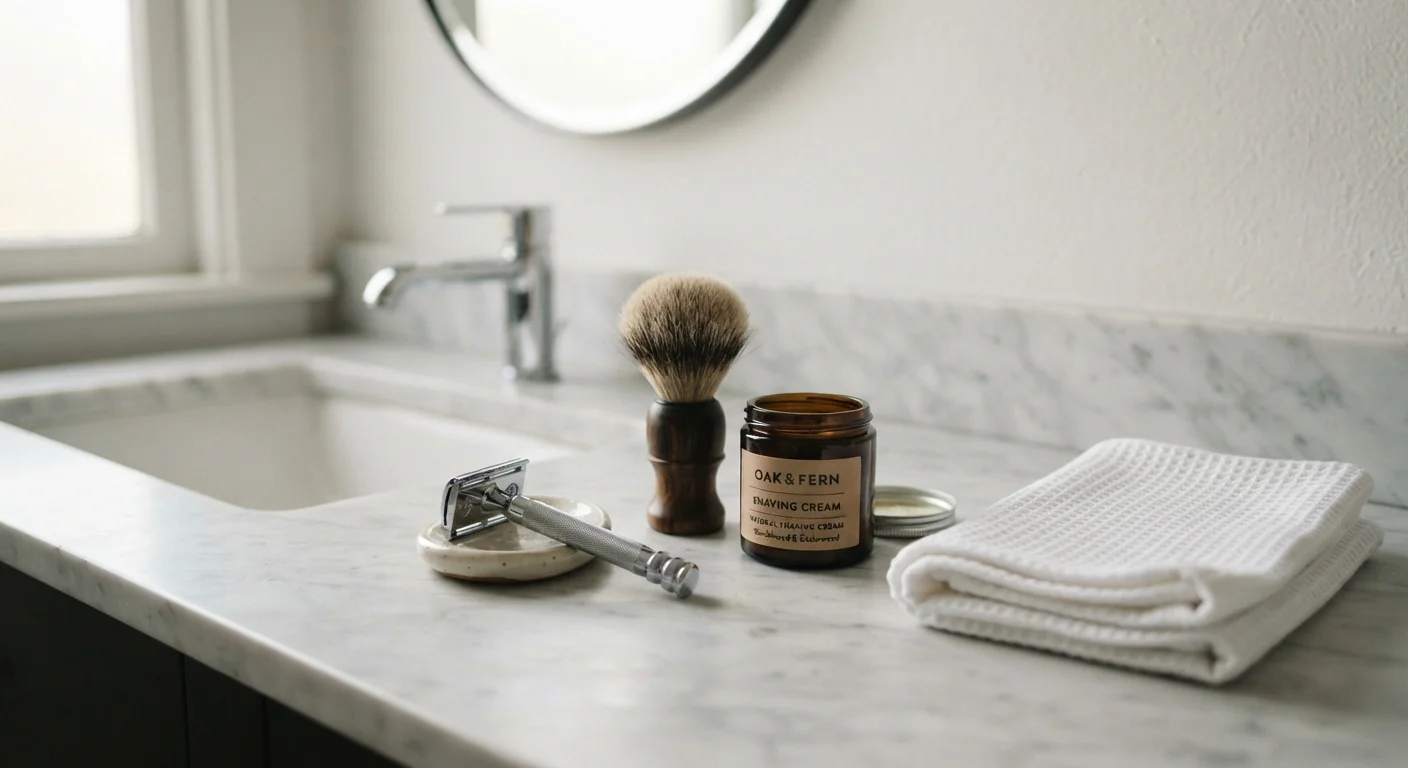
Key Takeaways
- Softening hair and skin with warm water before shaving significantly reduces friction and irritation.
- Shaving with the grain on the first pass prevents most cases of razor burn and ingrown hairs.
- A sharp blade does less damage than a dull one — replace cartridges or blades regularly.
- Post-shave moisturizing restores the skin barrier that shaving temporarily disrupts.
- People with coarser or curlier hair textures benefit from extra prep time and grain-aware technique.
What you will need
Why Shaving Causes Irritation — and How Technique Changes That
Razor burn, ingrown hairs, and post-shave dryness are not inevitable. They are usually the result of skipped preparation, a dull blade, or technique habits that put unnecessary friction on the skin. Understanding what's happening at the skin level makes it easier to intervene at the right point.
When a blade passes over the skin, it cuts hair at or just below the surface while also abrading the outermost layer of skin. Done correctly with adequate lubrication and a sharp edge, this is a minor disruption the skin recovers from quickly. Done without prep — or with too many repeated passes — it triggers inflammation, which appears as redness, bumps, or burning sensation.
Ingrown hairs are a separate but related issue. They occur when a cut hair curls back and re-enters the skin rather than growing outward. This is more common when hair is cut very short and at a sharp angle — which is exactly what happens with a close against-the-grain shave on coarse or curly hair. For more context on how hair texture affects technique, the guide to grooming across skin tones and hair textures offers practical, texture-specific guidance.
The steps below apply to facial hair, body hair, and leg shaving alike. Adjust pressure, blade angle, and grain direction based on the area and your individual hair pattern.
What you will need
Tools, Aftercare, and Building the Habit
Good shaving outcomes depend as much on your tools as your technique. A dull blade is one of the leading causes of irritation — it drags rather than cuts, requiring more pressure and more passes. As a general rule, a cartridge razor blade should be replaced after five to seven uses, though this varies with hair coarseness and how well the blade is rinsed and dried between uses.
Sharp razor blade or cartridge
A fresh edge glides across hair without pulling, reducing the friction that causes razor burn.
Shaving cream or gel
Creates a lubricating layer between the blade and skin to minimize irritation and allow a smoother pass.
Shaving brush
Lifts hair away from the skin when applying cream, improving blade contact and lather quality.
Warm water or warm towel
Softens hair and opens pores before shaving, making hair easier to cut cleanly.
Alcohol-free moisturizer or aftershave balm
Replenishes moisture and calms skin after shaving disrupts the surface barrier.
Exfoliating cloth or gentle scrub
Used before shaving to lift trapped hairs and remove dead skin cells that can clog the blade path.
If you're unsure whether a manual razor is right for your skin, a comparison of approaches may help — electric shaver vs. manual razor breaks down comfort, closeness, and skin-sensitivity factors side by side.
Map Your Hair Growth Before You Start
Hair doesn't grow in a single uniform direction across the face, neck, or body. Run a finger across the skin to feel which way the hair lies before your first pass. Knowing your grain pattern helps you shave more efficiently and avoid unnecessary repeat strokes over sensitive areas.
Post-shave care is an extension of skincare, not an optional add-on. If you find post-shave dryness or tightness is a recurring issue, it may point to a broader skincare gap — over-cleansing and under-moisturizing explores how everyday skincare missteps compound over time. For anyone building a routine from the ground up, the complete grooming starting point covers how shaving fits into a broader daily routine.
Soften the skin and hair with warm water
Shave after a warm shower, or apply a warm damp towel to the area for at least 60 seconds. Warmth softens the hair shaft — which can swell with moisture and become easier to cut cleanly — and relaxes the skin surface. Cold or dry hair resists the blade, which forces you to press harder and make more passes, both of which increase irritation.
Apply a generous layer of shaving cream or gel
Work a shaving cream, gel, or lathered soap into the area using your fingers or a shaving brush. The lubricating layer acts as a buffer between the blade and your skin. Avoid letting it dry out — if prep takes longer than a minute or two, re-apply before picking up the razor. Thicker, richer formulas generally offer more protection for sensitive or dry skin types.
Shave with the grain on the first pass
Hold the razor at a shallow angle — roughly 30 degrees — and draw it in the direction of hair growth (with the grain). Use short, light strokes and let the blade do the work rather than pressing down. Rinse the blade after every two or three strokes to clear cream and cut hair, which helps maintain consistent glide. A single with-the-grain pass removes the majority of growth without stressing the skin.
Make a second pass only if needed — carefully
If a closer result is desired, re-apply shaving cream and make a second pass across the grain (perpendicular to hair growth). Avoid going against the grain on sensitive areas or if your skin is already showing any redness. For people with very coarse or tightly curled hair, a single with-the-grain pass is often sufficient to avoid ingrown hairs, which are more likely to form when hair is cut at a very sharp angle close to the follicle.
Rinse thoroughly with cool water
After the final pass, rinse with cool or lukewarm water to remove all cream residue and help calm the skin surface. Pat (do not rub) the area dry with a clean towel. Rubbing a freshly shaved surface can cause immediate redness and remove some of the surface skin layer unnecessarily.
Apply moisturizer or aftershave balm immediately
Shaving removes a thin layer of dead skin cells along with the hair — which is a form of physical exfoliation that also temporarily disrupts the skin barrier. Apply an alcohol-free moisturizer or soothing aftershave balm within a minute of patting dry, while the skin is still slightly damp, to lock in moisture. Ingredients such as aloe vera, glycerin, and niacinamide are widely used to calm post-shave skin and support barrier recovery. Avoid products with high alcohol content, menthol, or artificial fragrance immediately after shaving, as these are common irritants on freshly exposed skin.
Active Skin Conditions Require Professional Guidance
If you have eczema, psoriasis, active acne, or open wounds in the shave area, consult a dermatologist before adjusting your shaving routine. Shaving over compromised skin can worsen inflammation and introduce infection risk. This article provides general grooming information, not medical advice.
This article is for general informational purposes only and does not constitute medical or dermatological advice. Consult a qualified healthcare professional if you have a skin condition or experience persistent irritation.