

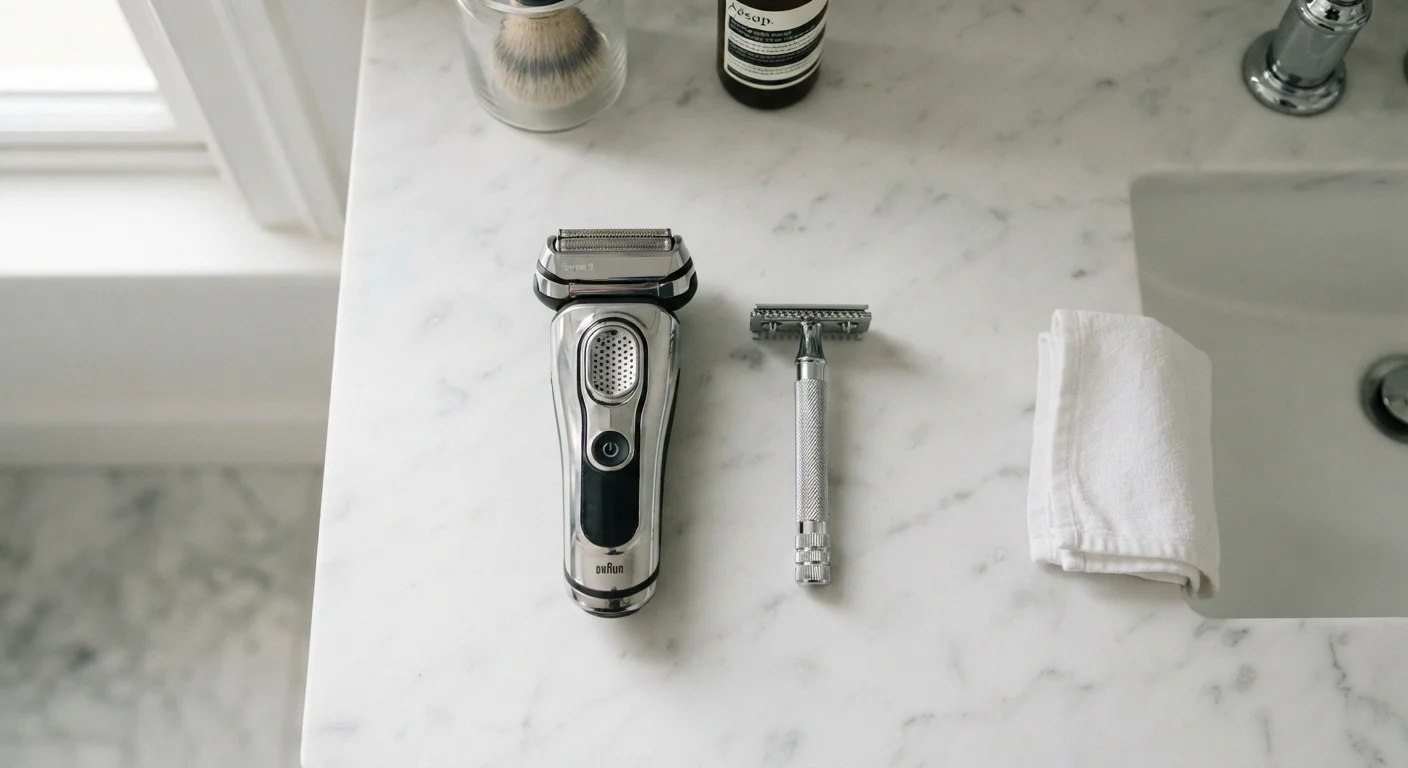
Key Takeaways
- Electric shavers generally cause less irritation, making them a strong option for sensitive or acne-prone skin.
- Manual razors typically deliver a closer shave, cutting hair at or just below the skin surface.
- People with coarser or curlier hair textures may find electric shavers reduce ingrown hair risk.
- Manual razors require more prep — warm water, shaving cream, and careful technique — to minimize skin trauma.
- Long-term costs differ: electric shavers have higher upfront costs but lower per-use expense over time.
- Neither method is universally superior; skin type, hair texture, and lifestyle all shape the best choice.
Option A
Electric Shaver
The low-irritation, convenience-first option.
Best for: Best for people with sensitive skin, busy schedules, or those prone to razor bumps and ingrown hairs.
Option B
Manual Razor
The close, precise shave with a traditional edge.
Best for: Best for those who prioritize a very close shave, enjoy a deliberate grooming ritual, or have coarser hair.
If you have sensitive or easily irritated skin
Electric Shaver
Electric shavers lift and cut hair without direct blade-to-skin contact, significantly reducing friction, redness, and razor burn for reactive skin types.
If you want the closest possible shave
Manual Razor
A sharp manual blade cuts hair at skin level, producing a noticeably smoother result that electric shavers generally cannot match.
If you have coarse or tightly coiled hair and struggle with ingrown hairs
Electric Shaver
Electric shavers cut hair slightly above the skin surface, reducing the likelihood of hairs curling back and growing inward — a common concern with tightly coiled textures.
If you travel frequently or shave on the go
Electric Shaver
Many electric shavers are cordless, waterproof, and work without lather or water, making them far more practical for travel or time-constrained mornings.
If you enjoy a deliberate, ritualistic grooming routine
Manual Razor
The combination of warm water prep, quality shaving cream, and careful blade technique offers a sensory, focused grooming experience many find satisfying and precise.
How Each Method Actually Works
Understanding what each tool does mechanically helps explain why the results — and the skin reactions — differ so much between users.
An electric shaver uses oscillating or rotating blades housed beneath a protective foil or guard. This design means the blade never makes direct contact with your skin. Hair is guided through small openings and cut just above the surface. The result is a shave that is close but not flush with the skin, which is precisely why irritation tends to be lower — there's less opportunity for abrasion or nicks.
A manual razor, whether a cartridge or safety razor, drags a sharp blade across the skin in direct contact. With proper preparation — warm water to open follicles, a quality shaving cream or gel to lubricate, and short, measured strokes — it cuts hair at or just below the skin's surface. The closeness is undeniable, but so is the higher skill requirement. Poor technique or a dull blade increases the risk of razor burn, irritation, and cuts.
For a deeper look at how technique affects outcomes with either method, see how preparation and aftercare change every shave.
| Criterion | Electric Shaver | Manual Razor |
|---|---|---|
| Closeness of shave | Close, not flush with skin | Very close, at or below skin surface |
| Skin irritation risk | Generally lower | Higher without proper technique |
| Ingrown hair risk | Lower, especially for coiled hair | Higher for tightly curled textures |
| Upfront cost | Higher | Low to moderate |
| Ongoing cost | Lower per use over time | Recurring blade replacement cost |
| Speed and convenience | Fast, no prep required | Slower, requires prep and aftercare |
| Water or lather required | Optional on most models | Strongly recommended |
| Best skin type fit | Sensitive, dry, acne-prone | Normal, oily, thicker skin |
Skin Type, Hair Texture, and Why They Matter
Grooming advice that ignores skin type and hair texture misses the most important part of the equation. The "best" shaving method is never one-size-fits-all.
Sensitive or acne-prone skin generally benefits from electric shaving. The reduced friction and the absence of blade-on-skin contact lowers the chance of inflaming existing breakouts or triggering post-shave redness. Those with dry skin may also find electric shavers less stripping, since no shaving cream is required to strip natural moisture.
Oily or thicker skin can typically tolerate the closer contact of a manual razor with fewer adverse effects, especially when paired with the right prep routine. Understanding your skin type is foundational here — our guide on what your skin type means for your grooming routine explains how to identify it accurately.
Hair texture is equally significant. People with tightly coiled or curly hair follicles face a higher risk of pseudofolliculitis barbae — commonly called razor bumps — when shaving too closely. Because manual razors cut below the skin surface, the hair can curl back as it regrows and pierce the surrounding tissue. Electric shavers, cutting slightly higher, reduce this risk considerably. For more on how hair texture shapes grooming decisions, this practical overview of grooming across textures and tones offers useful context.
~60%
Men who report razor bump issues
Dermatological literature consistently notes that pseudofolliculitis barbae affects a significant proportion of men who shave regularly, with higher prevalence among those with tightly coiled hair.
5–7 uses
Average lifespan of a cartridge blade
Shaving experts and blade manufacturers generally recommend replacing cartridge blades after five to seven shaves to maintain performance and reduce irritation risk.
Practicality, Cost, and Long-Term Maintenance
Beyond skin and hair considerations, everyday practicality often tips the decision.
Electric shavers carry a higher upfront cost but lower ongoing expense. Replacement foils or heads are needed periodically, but the per-shave cost drops substantially over months of use. They're also faster — most users complete a shave in two to four minutes without water or lather required — and travel-friendly when cordless models are charged in advance.
Manual razors are inexpensive to start but accumulate costs through blade replacements. Cartridge blades dull within five to seven uses on average, while double-edge safety razor blades — used with a classic safety razor — are significantly cheaper per unit. The ritual also takes longer: proper warm-water prep, lathering, careful multi-pass shaving, and post-shave care add meaningful time to a morning routine.
Maintenance hygiene matters for both. Electric shavers should be cleaned after each use — many are rinseable under water — and sanitized weekly to prevent bacteria buildup. Manual razor blades should be rinsed thoroughly, stored dry to slow oxidation, and never shared. Replacing blades before they dull is one of the most effective ways to reduce irritation with either cartridge or safety razor use.
If you're building a grooming routine from the ground up, this complete starting point for adult grooming covers how shaving fits into a broader set of daily habits.