

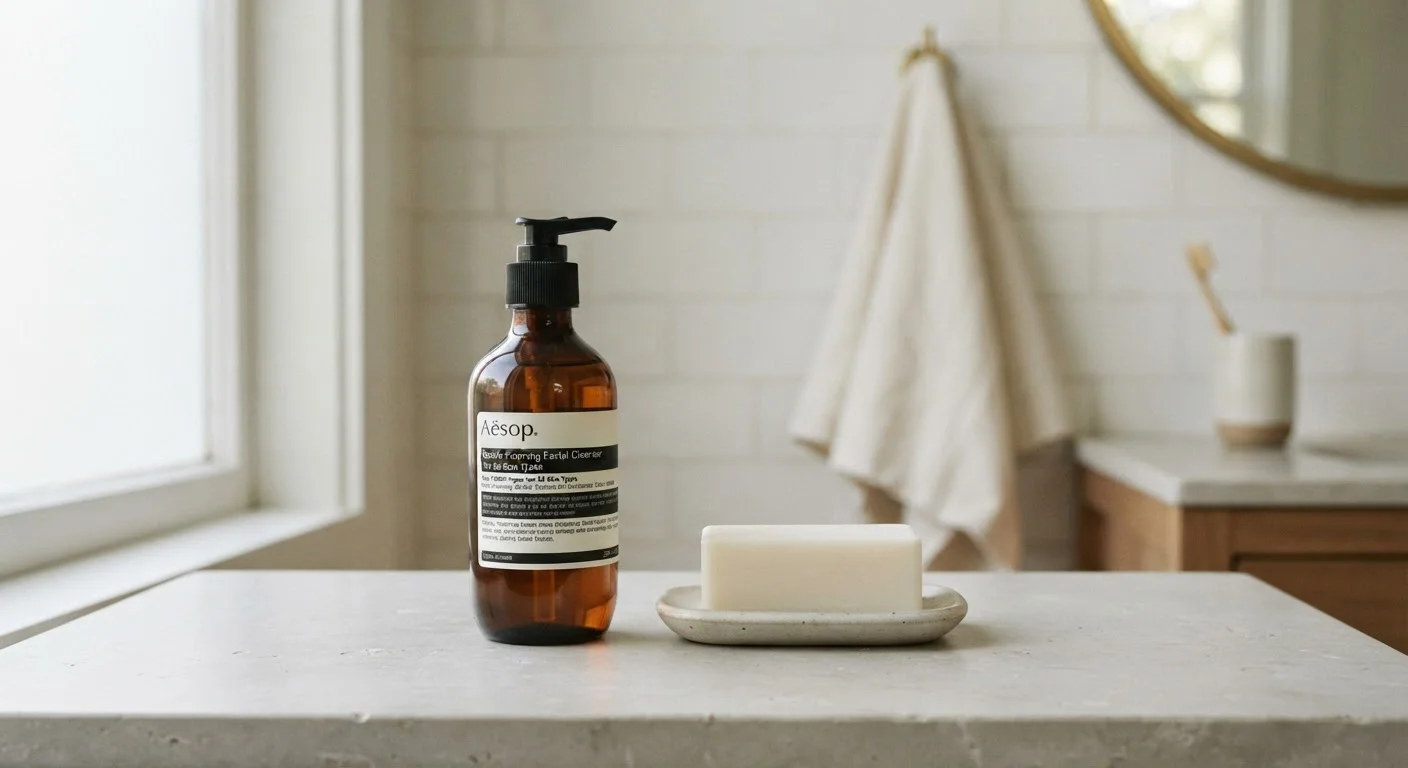
Key Takeaways
- Facial skin has a naturally acidic pH around 4.5–5.5; most traditional bar soaps sit at a more alkaline pH of 9–10.
- Disrupting the skin's pH can compromise the barrier, leading to dryness, irritation, or excess oil production.
- Face washes are formulated with surfactants and ingredients chosen specifically for the thinner, more reactive skin on your face.
- Some newer syndets (synthetic detergent bars) are pH-balanced and may be gentler alternatives to traditional soap.
- Your skin type and condition should guide your cleanser choice more than convenience or habit.
Option A
Face Wash (Facial Cleanser)
The skin-specific, pH-balanced cleansing solution.
Best for: Adults seeking a cleanser formulated specifically for facial skin's delicate barrier and varying skin types.
Option B
Bar Soap
The multipurpose, widely available body cleansing staple.
Best for: Adults looking for an accessible, multi-purpose cleanser suited primarily for body skin.
If you have dry, sensitive, or reactive facial skin
Face Wash (Facial Cleanser)
pH-balanced formulas with added humectants or soothing agents are far less likely to strip the skin barrier or trigger irritation.
If you have oily or acne-prone skin on your face
Face Wash (Facial Cleanser)
Targeted facial cleansers can address excess sebum without the alkaline disruption that causes compensatory oil overproduction.
If you need a body cleanser for normal, non-sensitive skin
Bar Soap
Body skin is thicker and more resilient, making traditional bar soap a practical and effective daily option for most people.
If you want an eco-conscious or low-packaging option for your face
Face Wash (Facial Cleanser)
Look for syndet bars — pH-balanced solid facial cleansers that combine the sustainability of bar format with face-appropriate chemistry.
Why Your Cleanser's pH Is the Core Issue
The single most important difference between a face wash and bar soap isn't format — it's pH. Healthy facial skin maintains a slightly acidic surface environment, sometimes called the acid mantle, typically ranging from pH 4.5 to 5.5. This acidity supports beneficial skin microbiota, reinforces the lipid barrier, and keeps moisture in while keeping irritants out.
Traditional bar soaps are manufactured through a saponification process that results in a pH of roughly 9 to 10 — significantly more alkaline than facial skin. Repeated exposure to a high-pH cleanser can temporarily shift the skin's surface pH, which research suggests may weaken barrier function and increase transepidermal water loss (TEWL). For a deeper look at why this matters structurally, see our article on the skin barrier and how to protect it.
Face washes, by contrast, are formulated to stay within — or close to — the skin's natural pH range. This alone makes them a substantially different tool, not just a repackaged version of soap.
| Criterion | Face Wash | Bar Soap |
|---|---|---|
| Typical pH range | 4.5–6.5 (skin-compatible) | 9–10 (alkaline) |
| Primary surfactant type | Synthetic, mild surfactants | Saponified fatty acids |
| Barrier impact | Generally low disruption | Higher disruption risk |
| Moisturizing additives | Common (glycerin, ceramides) | Rare in traditional soaps |
| Best suited for | Facial skin | Body skin |
| Format variety | Gel, foam, cream, oil, micellar | Solid bar (soap or syndet) |
| Packaging footprint | Typically plastic bottle | Minimal packaging |
Formulation Differences That Actually Matter
Beyond pH, the ingredient architecture of each product diverges considerably. Face washes typically use mild, synthetic surfactants — compounds such as cocamidopropyl betaine or sodium cocoyl isethionate — that lift dirt and oil from the skin without the aggressive stripping action of soap's fatty acid salts. Many facial cleansers also include supporting ingredients: humectants like glycerin to maintain hydration, and barrier-supporting agents like ceramides or panthenol.
Bar soaps, built around saponified fats or oils, are highly effective degreasers — which is exactly what you want when washing hands or body skin that tolerates more vigorous cleansing. Facial skin is thinner, denser in nerve endings, and more prone to reactivity, making that same degreasing strength a liability rather than an asset.
What About Syndet Bars?
Syndet (synthetic detergent) bars look like soap but are formulated very differently. They use pH-balanced surfactants rather than saponified fats, making them closer to a liquid face wash in their skin interaction. If you prefer a solid bar for sustainability reasons, a syndet bar labeled with a pH of 5–7 is a reasonable alternative to a bottled face wash. Traditional soap and syndet bars are not the same product despite their similar appearance.
It's worth distinguishing syndet bars (synthetic detergent bars) from traditional soap bars. Syndet bars are solid cleansing bars formulated with pH-balanced surfactants rather than saponified fats. They can be appropriate for facial use and are an option worth considering if you prefer a bar format. Check the packaging: a true syndet bar will typically list a pH between 5 and 7.
Understanding how your cleanser interacts with your skin also depends on knowing your skin type versus your skin condition — two things that are often confused but require very different approaches.
Practical Guidance: Choosing What Your Skin Actually Needs
For most adults, a dedicated face wash is the more reliable daily choice for facial cleansing. That said, a few practical principles help narrow things down further:
- Dry or sensitive skin: Prioritize cream or lotion cleansers with a short, recognizable ingredient list. Fragrance-free formulas reduce the risk of irritation.
- Oily or acne-prone skin: Gel or foaming face washes tend to control sebum more effectively without the pH-related rebound oiliness that alkaline soap can trigger.
- Combination skin: A balanced, gentle face wash used consistently typically outperforms rotating between multiple products. For further refinement of your routine, chemical exfoliants can address texture concerns without placing additional burden on cleansing.
- Body skin: Bar soap remains a well-suited, practical option. Body skin's greater thickness and lower reactivity make the alkaline environment of soap far less problematic.
Frequency matters too. Over-cleansing — regardless of the product — is a recognized contributor to barrier disruption. Most dermatologists suggest washing the face no more than twice daily. If your skin feels tight, stripped, or more reactive than usual after cleansing, the formula or frequency is likely worth revisiting.
pH 9–10
Typical pH of traditional bar soap
Research published in dermatology literature consistently identifies traditional soap pH as significantly higher than the skin's natural acid mantle range of 4.5–5.5.
~4.5–5.5
Healthy facial skin surface pH
The skin's acid mantle pH range is well-documented in dermatological science and is central to barrier integrity and microbiome balance.
This article is for general informational purposes only and is not a substitute for advice from a qualified dermatologist or skincare professional. Individual results vary based on skin type, condition, and other factors.