

Key Takeaways
- Never cancel your old policy before your new one is confirmed active.
- A coverage lapse — even one day — can raise your future premiums.
- Check for short-rate cancellation penalties before you switch mid-term.
- Match your new coverage limits to your existing policy before binding.
- Your lender must be notified immediately if your vehicle is financed or leased.
Summary
18 items · 30–60 minutes
Why the Timing of Your Switch Matters More Than You Think
Switching auto insurance providers is one of the most practical ways to manage your vehicle costs — but the sequence of steps you follow determines whether you save money or create an expensive problem. A single day without coverage is legally classified as a lapse, and insurers treat lapses as elevated risk. The result: higher premiums when you reapply, regardless of your clean driving record.
Before you dive into the checklist below, it helps to understand what you're comparing. If you're unclear on terms like liability, comprehensive, or collision, see our coverage type explainer first. Switching without understanding your current coverage can leave you with a policy that looks similar on price but offers meaningfully less protection.
This checklist walks you through every step in the right order — from gathering your current policy details to confirming cancellation in writing.
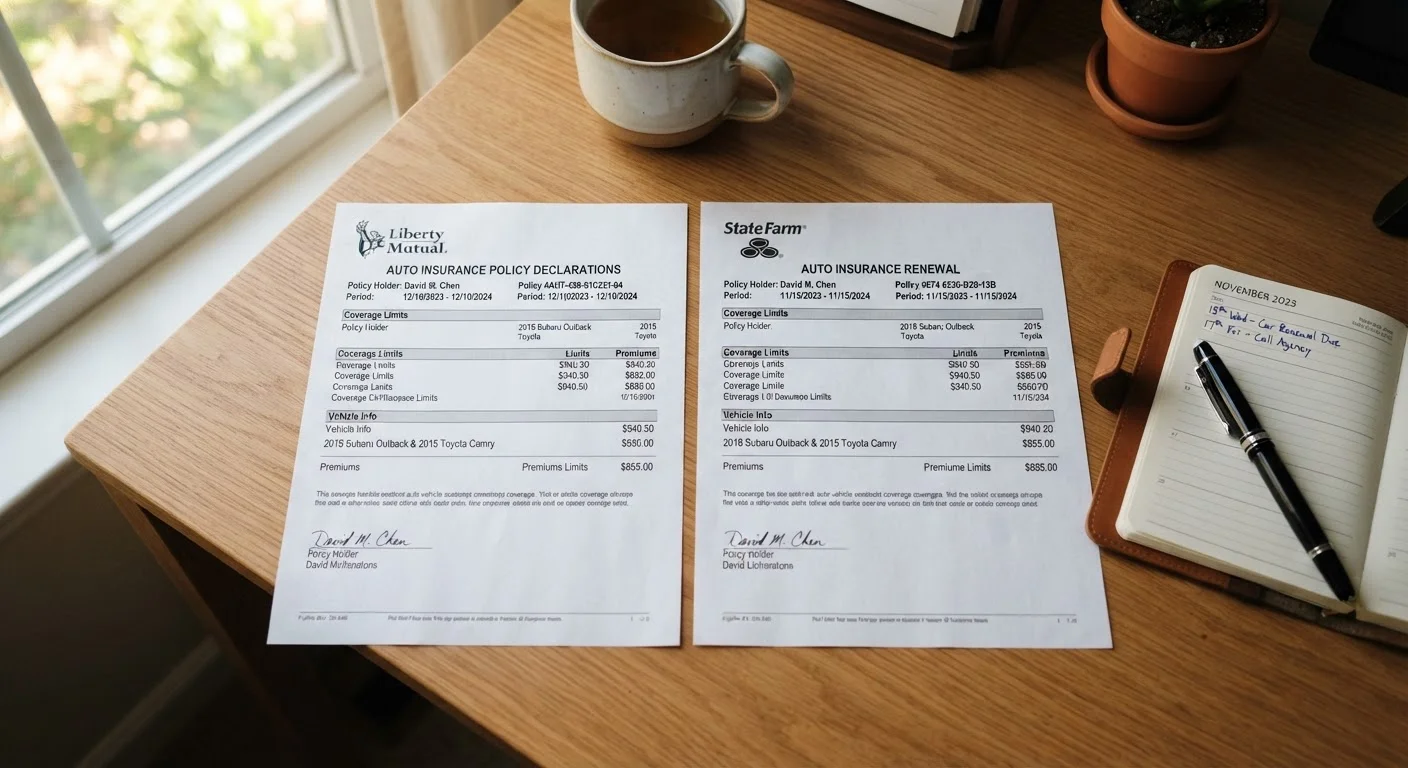
Current declarations page
Documents your existing coverage limits, deductibles, and policy period — the baseline for any comparison.
State department of insurance website
Lets you verify that a prospective insurer is licensed to operate in your state.
Vehicle registration and VIN
Required when applying for a new policy so the insurer can accurately rate your vehicle.
Lender or leasing contact information
Needed to notify the lienholder of your new policy and confirm their required coverage minimums are met.
Independent insurer financial ratings
Helps you assess the financial stability of a new insurer before committing to a policy.
The Switch Checklist: Step by Step
Work through each group in order. Don't skip ahead to cancelling your old policy — that step comes last, and only after everything else is confirmed in writing.
Preparation
Shopping and Comparing
Binding the New Policy
Cancelling the Old Policy
Post-Switch Verification
Short-Rate Cancellation Fees Can Reduce Your Refund
If you cancel a policy mid-term, some insurers apply a short-rate penalty — meaning you receive less than a full prorated refund of your unused premium. This fee varies by insurer and state regulation. Always ask your current insurer about their cancellation terms before assuming you'll get a full refund for the remaining coverage period.
Once you've completed the switch, it's worth revisiting your coverage levels. If you're weighing whether full coverage still makes sense for your vehicle's age and value, our liability-only vs. full coverage comparison lays out the trade-offs clearly.
You should also be aware that many common beliefs about auto insurance — like assuming personal coverage extends to work-related driving — can quietly leave you exposed. Common auto insurance myths worth knowing is a useful read once your new policy is in place.
Never Drive Uninsured — Even for One Day
Driving without active insurance, even briefly, is illegal in almost every U.S. state and can result in fines, license suspension, and vehicle impoundment. Beyond the legal consequences, a documented lapse — even one day — is visible to future insurers and can result in higher premiums for years. The single most important rule in this checklist: your new policy must be active before your old one ends.