

Key Takeaways
- A sinking fund saves small, regular amounts for predictable future costs — not emergencies.
- Sinking funds eliminate the shock of large, irregular bills by spreading the cost over time.
- You can maintain multiple sinking funds simultaneously, each in its own labeled category.
- Sinking funds and emergency funds serve different purposes and should both exist in a healthy budget.
- Even modest monthly contributions — as little as $10–$25 — can prevent budget-busting surprises.
Sinking Fund
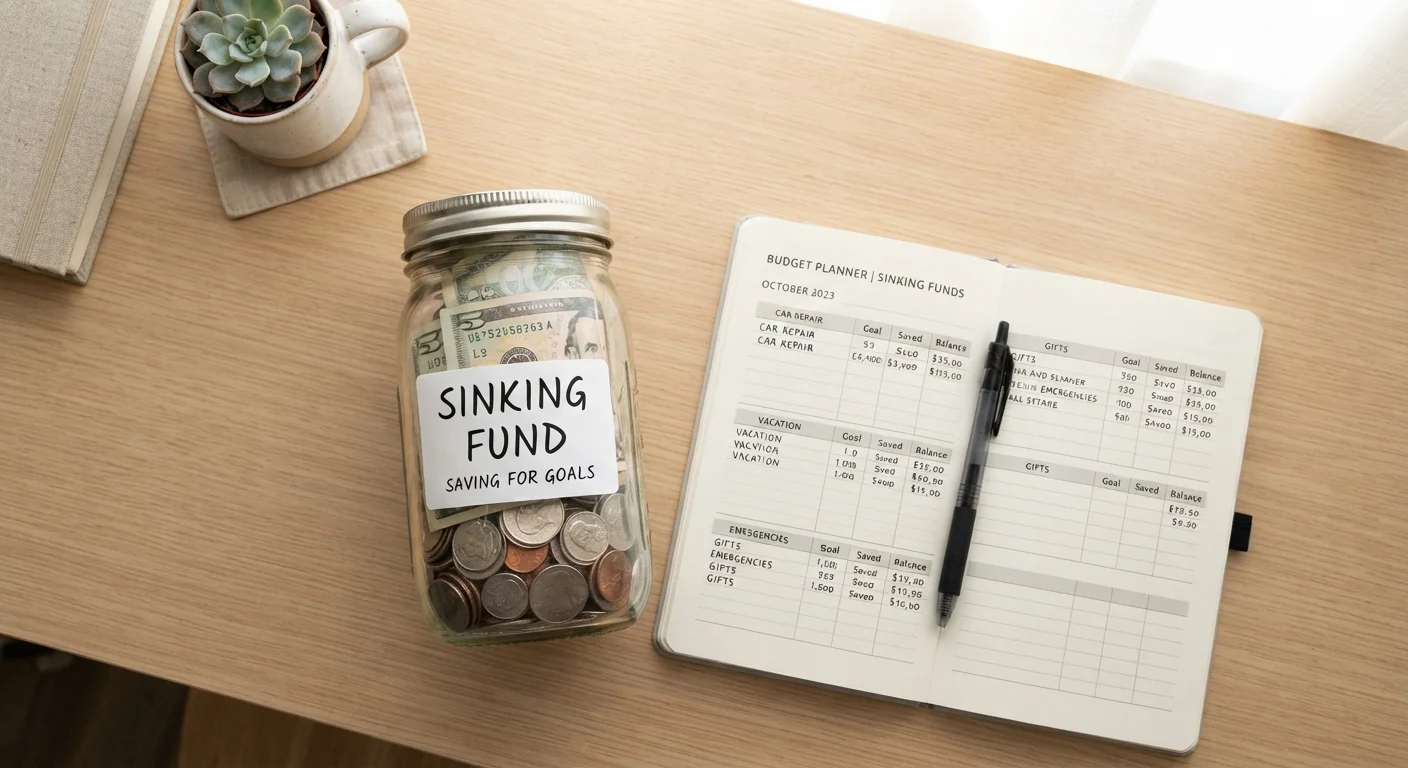
A sinking fund is a dedicated savings pool you build up gradually over time to cover a specific, anticipated expense. Instead of scrambling to pay a large bill all at once, you divide the total cost into smaller monthly amounts and set them aside in advance. Common uses include car repairs, annual insurance premiums, holiday gifts, and home maintenance.
In corporate finance, sinking funds are used by bond issuers to retire debt incrementally. In personal finance, the term is adapted to describe any category-specific savings bucket earmarked for a known future outlay.
Why Most Budgets Break Down
Many people build a monthly budget that accounts for rent, utilities, groceries, and subscriptions — and still find themselves blindsided by a $700 car repair or a $500 dental bill. The problem isn't poor discipline. It's that most budgets are designed around recurring monthly costs and quietly ignore large, irregular-but-predictable expenses.
These overlooked categories are surprisingly common. Annual subscriptions, car repairs, gifts, and vet bills rarely appear in a first budget — until they derail one. Sinking funds solve this structural gap by treating future known costs as current monthly obligations.
Sinking Funds Are Not a New Concept
The term 'sinking fund' dates back centuries in government and corporate finance, where it described reserves set aside to retire debt. In personal finance, the concept was popularized by budgeting educators as a straightforward way to handle planned irregular expenses. You may also encounter the term 'targeted savings' used interchangeably in some budgeting frameworks.
How a Sinking Fund Actually Works
The mechanics are straightforward. Identify an anticipated expense, estimate its cost, decide when you'll need the money, then divide the total by the number of months remaining. That monthly figure becomes a non-negotiable line in your budget — just like rent.
For example, if you spend roughly $1,200 on holiday gifts and travel each December, and you start planning in January, you need to set aside $100 per month. By December, the money is ready and no credit card debt is created.
~$1,500
Average cost of a mid-range car repair in the US
Industry repair data consistently shows that transmission, engine, and suspension work regularly exceeds $1,000, making vehicle maintenance one of the strongest candidates for a dedicated sinking fund.
40%
Americans who couldn't cover a $400 unexpected expense
According to the Federal Reserve's Report on the Economic Well-Being of U.S. Households, a significant share of adults lack the liquidity to absorb even a modest unplanned cost — a gap sinking funds are specifically designed to close.
$800–$1,200
Typical US household annual holiday spending
The National Retail Federation has consistently tracked holiday spending at this range for average American households, making it one of the most predictable large annual expenses to plan for.
The key distinction from general savings is specificity. Each sinking fund has a name, a target amount, and a deadline. That clarity is what makes the system work — and what prevents the money from being absorbed into everyday spending.
Sinking Funds vs. Emergency Funds: An Important Distinction
These two tools are often confused, but they serve fundamentally different roles. An emergency fund is a financial safety net for genuinely unexpected events — job loss, an unplanned hospital visit, a burst pipe. A sinking fund is for costs you can see coming.
Think of it this way: a car breaking down without warning is an emergency. Scheduling your car's 60,000-mile service next spring is not — it's a sinking fund opportunity. Both accounts should exist simultaneously. Relying on an emergency fund to cover predictable costs drains the safety net you need for true crises.
Automate Transfers on Payday
Set up automatic transfers to each sinking fund account on the same day your paycheck arrives. This 'pay yourself first' approach ensures contributions happen before discretionary spending does. Even a small automatic transfer — $15 or $20 — builds a meaningful cushion over several months without requiring active effort each cycle.
Setting Up Your First Sinking Fund
Start by listing every large, irregular expense you can recall from the past year or two. Include annual insurance renewals, car registration fees, planned vacations, medical deductibles, and seasonal costs like heating oil or holiday spending. Estimate the dollar amount and when you'll need it for each.
Prioritize two or three of the most urgent or costly items. Open a dedicated savings account — or use a bank that allows named sub-accounts — and automate a monthly transfer on payday. Automation is critical: it removes the decision from your hands each month and treats the contribution as a fixed expense.
As your confidence grows, add more sinking fund categories. This approach pairs well with broader budgeting strategies covered in our complete personal budgeting guide. If your income is limited, building a savings habit when money is tight offers practical strategies for starting small without feeling stretched.
This article is for general informational and educational purposes only and does not constitute personalized financial advice. Consult a qualified financial professional for guidance tailored to your individual circumstances.