

Key Takeaways
- Brick offers the longest lifespan with minimal maintenance but carries the highest upfront installation cost.
- Timber cladding provides natural aesthetics but requires regular sealing, staining, or painting to prevent rot.
- Fibre cement balances durability, fire resistance, and moderate cost, making it a versatile choice for many climates.
- Render is cost-effective and highly customizable in finish, but is prone to cracking if not properly applied or maintained.
- Climate, budget, and desired maintenance commitment should all guide your cladding material decision.
Our Verdict
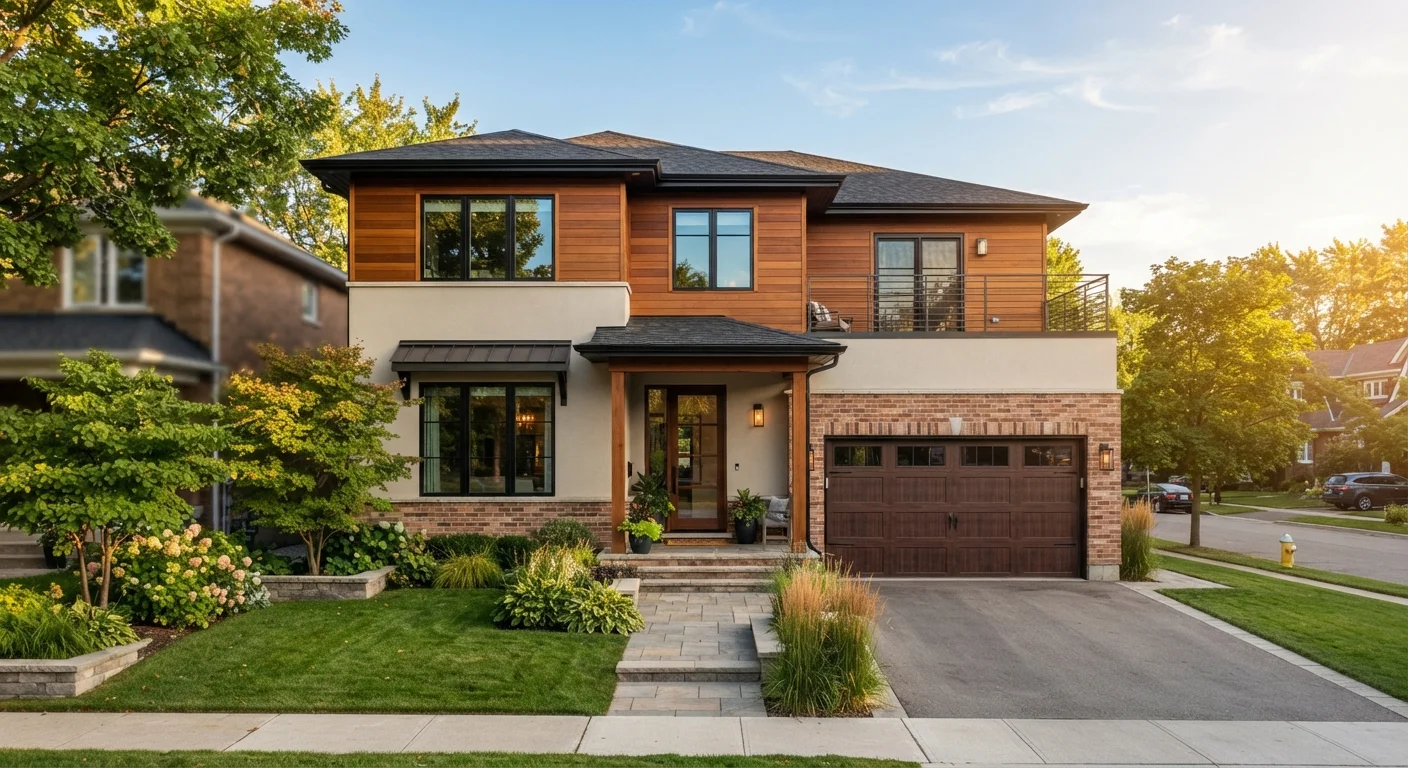
No single cladding material suits every home or homeowner. Brick leads in longevity and low maintenance but demands a larger upfront investment. Fibre cement strikes a practical middle ground across most performance categories. Timber wins on natural beauty but requires consistent upkeep, while render offers design flexibility at an accessible price point with some trade-offs in durability.
| Best for | Recommended |
|---|---|
| Homeowners prioritizing long-term durability with minimal upkeep | Brick |
| Those seeking a balance of performance, cost, and fire resistance | Fibre Cement |
| Those who want a warm, natural aesthetic and can commit to regular maintenance | Timber |
| Budget-conscious homeowners who want design flexibility | Render |
How These Four Cladding Materials Stack Up
Exterior cladding does more than define a home's appearance — it regulates moisture, insulation, and structural protection. Understanding the core differences between timber, brick, render, and fibre cement helps homeowners make informed decisions before committing to a significant investment.
| Timber | Brick | Render | Fibre Cement | |
|---|---|---|---|---|
| Typical Lifespan | 30–50 years (maintained) | 100+ years | 20–40 years | 25–50 years |
| Relative Upfront Cost | Moderate | High | Low–Moderate | Moderate |
| Maintenance Frequency | High (3–7 years) | Low (repoint as needed) | Moderate (inspect every 2 years) | Low–Moderate (10–15 years) |
| Fire Resistance | Low (unless treated) | High | Moderate | High |
| Pest Resistance | Low–Moderate | High | High | High |
| Moisture Resistance | Low (requires sealing) | Moderate–High | Moderate (cracks risk) | High |
| Design Flexibility | High | Moderate | High | High |
| DIY-Friendly Installation | Moderate | No — professional required | No — professional required | Moderate with experience |
Each material involves unique installation requirements, ongoing maintenance responsibilities, and performance characteristics that vary depending on your regional climate. The sections below break down what matters most for each option.
Timber Cladding: Natural Character With a Maintenance Commitment
Timber cladding — including options like cedar, redwood, and pine — delivers a warm, natural aesthetic that many homeowners find difficult to replicate with other materials. It is also relatively straightforward to install and repair, making it popular for both new builds and renovation projects.
The key trade-off is maintenance. Untreated or poorly maintained timber is vulnerable to moisture penetration, rot, insect damage, and warping. Most exterior timber cladding should be inspected annually and recoated with paint, stain, or sealant every three to seven years depending on climate exposure and product type. In humid or high-rainfall regions, this cycle may need to be shortened.
Extend Timber Life With Proper Preparation
Before applying any stain or sealant to timber cladding, ensure the surface is clean, dry, and free of existing flaking product. Applying a finish over damp or contaminated timber traps moisture and accelerates deterioration. Back-priming each board — coating the back face before installation — significantly reduces moisture uptake and warping over time.
When properly maintained, quality timber cladding can last 30 years or more. Sustainably sourced or thermally modified timber options are increasingly available and offer improved dimensional stability compared to untreated alternatives.
Brick: Low Maintenance, High Longevity
Brick veneer or full-brick construction is widely regarded as one of the most durable exterior finishes available. It resists fire, pests, and moisture without requiring periodic recoating — a significant advantage over organic materials like timber or render.
The upfront cost of brick is typically higher than other cladding options, both for materials and skilled labor. Brick also adds considerable weight to a structure, which may require engineering considerations on certain builds or retrofits. However, once installed correctly, brick can last well over 100 years with only occasional mortar repointing to maintain structural integrity.
Check Local Codes Before Choosing Cladding
Many US municipalities have specific requirements governing exterior cladding materials, particularly in fire-prone zones, historic districts, or areas with HOA restrictions. Before purchasing materials or hiring contractors, verify compliance with local building codes and obtain any required permits. Work involving structural wall systems may also require inspections at various stages of installation.
Brick is not well-suited to all climates. In areas prone to freeze-thaw cycles, certain brick types can absorb water and spall over time. Always confirm the brick grade and suitability with a licensed masonry professional before installation.
Render: Flexible, Affordable, and Prone to Cracking
Render — applied as a cement, acrylic, or polymer-based coating over a substrate — allows for a smooth or textured finish in a wide range of colors. It tends to cost less than brick or fibre cement, and the application process is relatively fast compared to masonry work.
The main limitation of render is its tendency to crack, particularly if applied over a substrate that experiences movement or if the mix ratios are not correctly balanced. Hairline cracks allow moisture ingress, which can lead to more significant damage behind the wall if not addressed promptly. Exterior render should be inspected at least every two years and any cracks sealed immediately. Acrylic-based renders tend to be more flexible and crack-resistant than traditional sand-and-cement mixes.
Fibre Cement: A Durable, Versatile All-Rounder
Fibre cement cladding — made from a blend of cement, cellulose fibres, and sand — has grown significantly in popularity among US homeowners. It resists fire, termites, and moisture more effectively than timber, and its dimensional stability means it expands and contracts less with temperature changes.
Fibre cement can be manufactured to mimic the appearance of timber weatherboard, shingles, or smooth panel systems, offering design flexibility that brick and render cannot easily match. It does require painting and periodic repainting — typically every 10 to 15 years depending on the product — but this maintenance cycle is considerably less demanding than timber.
Installation should be carried out by experienced contractors, as improper fixing or inadequate sealing at joints can compromise moisture performance. When installed and maintained correctly, fibre cement products commonly carry manufacturer warranties ranging from 25 to 50 years.
15%
Of US homes re-clad annually use fibre cement
Fibre cement has become one of the most commonly specified cladding materials in new US residential construction, according to industry reporting from the US Census Bureau's Survey of Construction.
100+ years
Potential lifespan of well-maintained brick cladding
Brick buildings from the early 20th century remain structurally sound across the US, demonstrating brick's exceptional longevity when properly installed.