

Key Takeaways
- Tomato cracking is almost always caused by inconsistent soil moisture, not disease or pests.
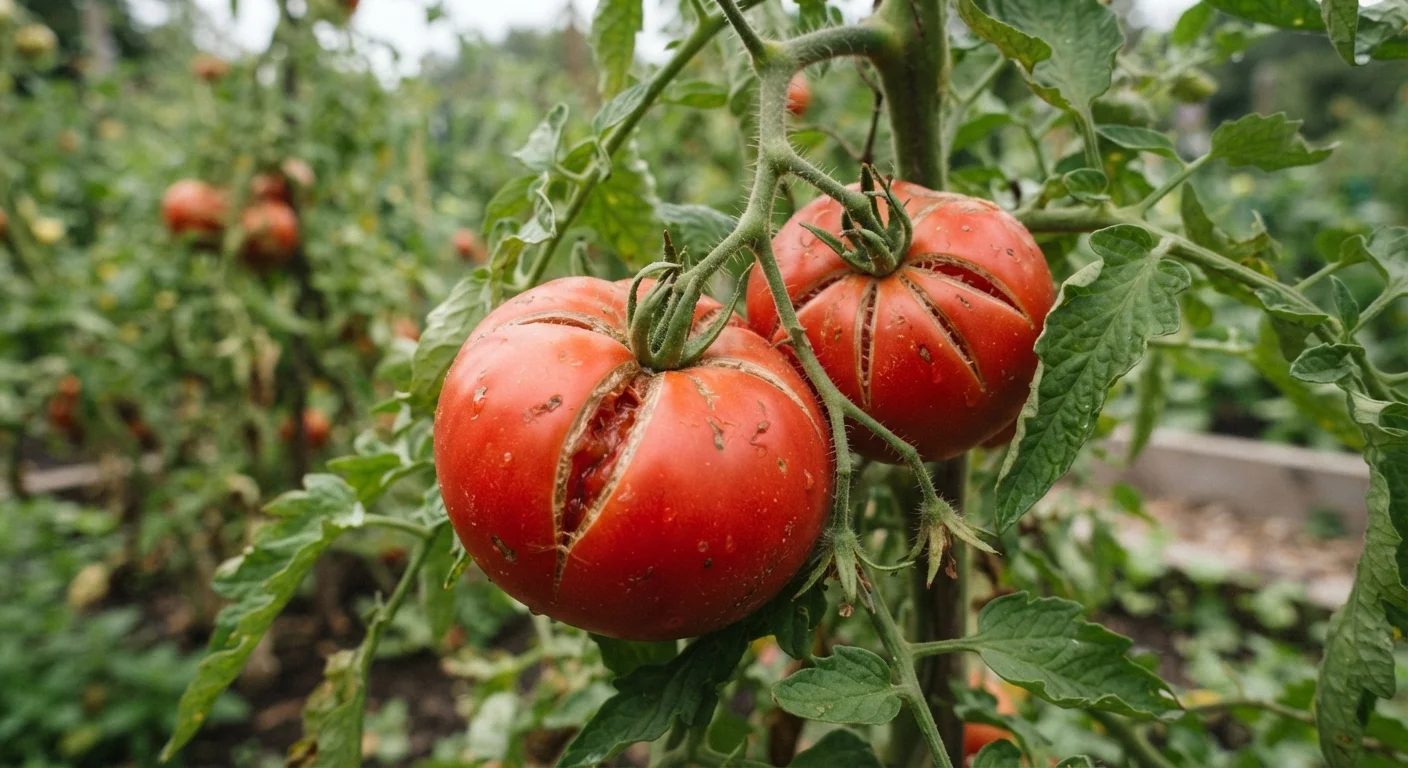
- Radial cracks run from the stem down; concentric cracks circle the top — both have the same root cause.
- Mulching and consistent watering schedules are the two most effective preventive measures.
- Some tomato varieties are genetically more crack-resistant and worth selecting for problem-prone gardens.
- Harvest tomatoes at first color break to avoid cracking during the final ripening stage.
What Cracking Actually Tells You
When a tomato cracks, it's sending a clear signal: the fruit expanded faster than its skin could stretch. This almost always traces back to water — specifically, a sudden surge of moisture after a dry period. The inner flesh absorbs water rapidly and swells, while the outer skin, which has already partially set, can't keep pace and splits.
There are two distinct crack patterns. Radial cracks run from the stem end down toward the blossom end and tend to be deeper. Concentric cracks form rings around the shoulder of the fruit and are usually shallower. Both are caused by the same pressure imbalance, though radial cracks are generally more damaging and more prone to inviting rot.
Understanding this mechanism is key, because it means cracking is largely a cultural problem — one you can address by changing how and when you water, not by reaching for a spray bottle.
~1 inch
Recommended weekly water for tomatoes
University cooperative extension guidelines consistently recommend approximately 1 to 1.5 inches of water per week for tomatoes, delivered evenly rather than in single large doses.
3–4 in.
Ideal mulch depth around tomato plants
Research from US land-grant university extension programs suggests a 3–4 inch mulch layer effectively stabilizes soil moisture and reduces the moisture swings that trigger cracking.
Common Mistakes That Lead to Cracking
Most cracking problems in home gardens come down to a handful of recurring errors. Recognizing your own habits in this list is the first step toward healthier fruit.
Allowing soil to dry out completely between waterings.
Why it happens: Gardeners often underwater during busy weeks or assume rain will cover the deficit, leading to extended dry periods followed by heavy irrigation.
Watering heavily right after a long dry spell or heavy rain.
Why it happens: A soaking rain or a generous catch-up watering session delivers a sudden flood of moisture the roots absorb all at once, causing rapid fruit expansion.
Skipping mulch entirely or applying too thin a layer.
Why it happens: Newer gardeners often treat mulch as optional, not realizing it plays a direct role in moisture regulation and soil temperature stability.
Leaving fruit on the vine past peak ripeness during wet weather.
Why it happens: Gardeners wait for tomatoes to reach full color on the plant, which is understandable, but fully ripe fruit has tighter, more stressed skin that splits easily when rain arrives.
Over-fertilizing with high-nitrogen feeds late in the season.
Why it happens: Gardeners sometimes apply a general-purpose fertilizer late in the growing season, not realizing excess nitrogen promotes rapid vegetative and fruit growth that outpaces skin development.
Practical Steps to Protect Your Harvest
Once you understand what drives cracking, the fixes become straightforward — though they do require consistency.
Mulch Heavily and Early
A 3–4 inch layer of organic mulch (straw, shredded leaves, or wood chips) around the base of each plant acts as a buffer. It slows evaporation during dry spells and moderates how quickly soil absorbs rain after a dry period. Apply mulch after the soil has warmed in late spring, keeping it a few inches away from the main stem to discourage rot.
Water on a Schedule, Not by Impulse
Drip irrigation or soaker hoses on a timer are the gold standard for tomatoes. They deliver water directly to the root zone at a steady, predictable rate — exactly the opposite of erratic hand-watering. If you do water by hand, aim for deep, infrequent sessions (roughly 1–1.5 inches per week total, including rainfall) rather than light daily sprinkles.
Choose Crack-Resistant Varieties
If cracking is a recurring problem in your garden despite good watering practices, consider selecting varieties bred for crack resistance. Many cherry tomato types and certain slicing varieties carry this trait. Check seed descriptions or ask your local cooperative extension office for variety recommendations suited to your climate.
Harvest Earlier
Tomatoes don't need to reach full red on the vine. Once a fruit shows the first flush of color (the "breaker stage"), it will continue to ripen indoors at room temperature without significant quality loss. Picking at this stage removes the fruit before the skin is most vulnerable to splitting from late-summer rain bursts.
Don't Eat Deeply Cracked Tomatoes Without Inspection
Shallow surface cracks that have healed over (called 'cat-facing' or dried radial lines) are cosmetic and the fruit is generally safe to eat. However, deep open cracks that expose the inner flesh can allow mold, bacteria, and insects to enter. Inspect cracked fruit carefully, cut away any soft or discolored tissue well beyond the crack, and use affected tomatoes promptly rather than storing them.