

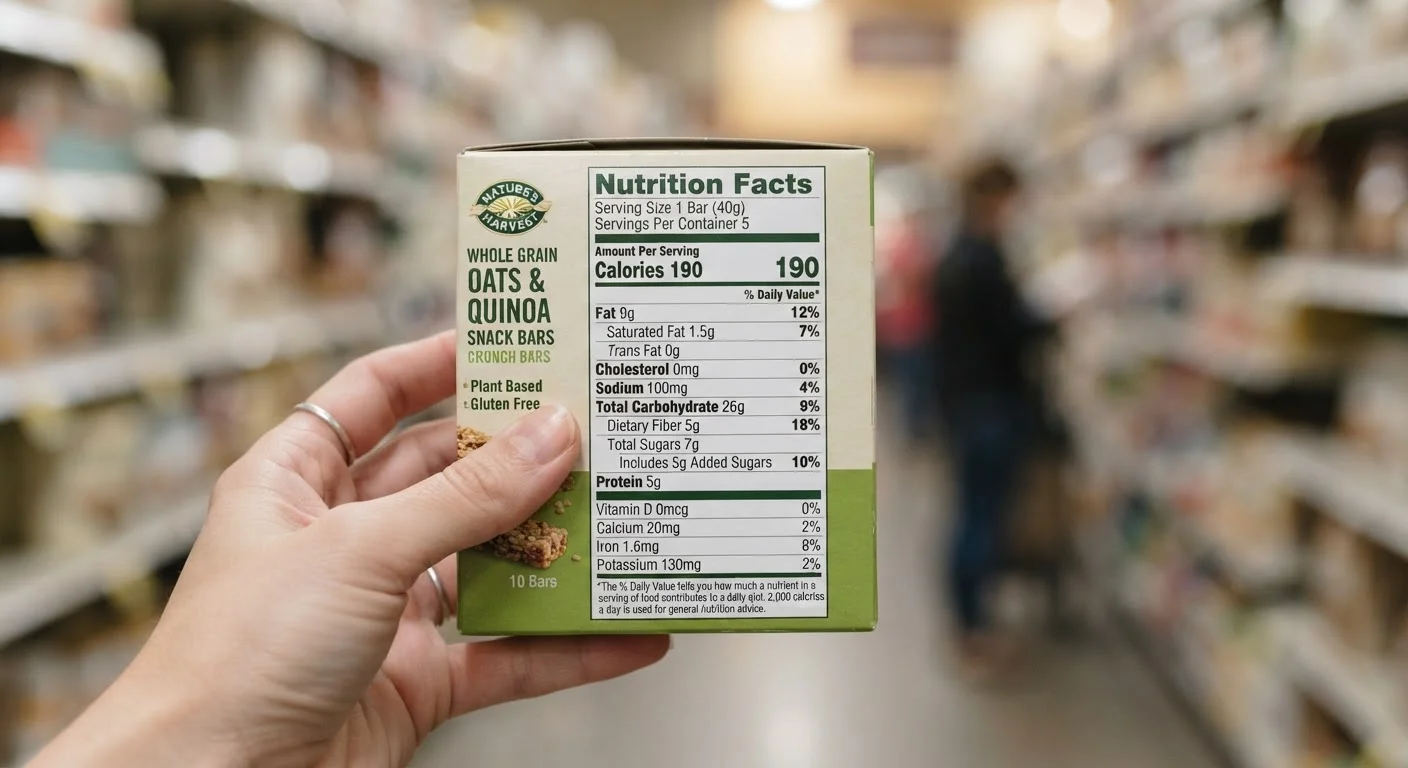
Key Takeaways
- Serving size is the foundation of every other number on the label — always check it first.
- Percent Daily Values are based on a 2,000-calorie reference diet and may not match your individual needs.
- Ingredients are listed by weight in descending order, revealing a product's true composition.
- Nutrient claims like 'reduced fat' or 'light' follow federal definitions — context still matters.
- Added sugars and sodium are two of the most practically useful figures for everyday decision-making.
What you will need
Why Label Literacy Is a Practical Health Skill
Food packaging is designed first to sell, second to inform. Front-of-pack design, color, and claims are crafted to shape perception before a consumer ever reads the Nutrition Facts panel. Understanding the structure and regulatory rules behind food labels gives you an objective basis for comparison — one that marketing cannot override.
The FDA's updated Nutrition Facts label format, which most manufacturers have adopted, reflects current nutritional science more accurately than previous versions. Changes include the addition of a dedicated added sugars line, updated serving sizes based on consumption data, and revised %DV figures for several nutrients. These updates make the label a more reliable tool — but only if you know how to read it.
Label literacy pairs naturally with broader nutrition awareness. For a deeper look at how eating patterns support sustained daily energy, see our article on evidence-informed nutrition principles. If you're also evaluating ingredient lists for other products in your household, the approach shares common ground with reading a skincare ingredient list — both rely on understanding how ingredients are ordered and named.
Labels Inform — They Don't Decide
Nutrition labels are a tool for general awareness, not a clinical prescription. Individual nutrient needs vary based on age, health status, activity level, and medical history. If you have a specific health condition, are managing a chronic disease, or have been advised to follow a therapeutic diet, consult a registered dietitian or your healthcare provider before making significant dietary changes.
Step-by-Step: Reading Any Nutrition Label
The following steps apply to any standard packaged food bearing an FDA-mandated Nutrition Facts panel. Work through them in order — each step builds on the one before it.
What you will need
Packaged Food Item
The label you are reading — any product with a mandatory FDA Nutrition Facts panel.
FDA Reference Guide (FDA.gov)
The FDA's official explanation of label terms, %DV benchmarks, and nutrient definitions.
Start with the Serving Size
The serving size is displayed at the very top of the Nutrition Facts panel and is the reference point for every number that follows. It is expressed both as a household measure (e.g., 1 cup) and a gram weight. Critically, serving sizes are standardized by the FDA to reflect amounts people typically consume — not necessarily a recommended portion. If a bag of chips lists a serving as 15 chips but you eat 30, every figure on the label doubles. Check the servings per container line immediately below to understand what the full package represents.
Read the Calorie Count in Context
Calories appear in large type directly below the serving information. This figure represents the total energy provided per serving. On its own, a calorie count is neither good nor bad — its relevance depends on how it fits within your overall daily energy intake, which varies by individual. Use it as one data point, not a singular judgment of a food's quality.
Interpret Percent Daily Values (%DV)
Each listed nutrient carries a %DV figure on the right side of the panel. This percentage reflects how much of that nutrient one serving contributes toward a reference daily intake based on a 2,000-calorie diet — a standardized benchmark, not a universal prescription. Use %DV to compare similar products side-by-side, or to identify whether a food is meaningfully high or low in a specific nutrient.
Identify Nutrients to Limit and Prioritize
Current U.S. dietary guidance identifies a short list of nutrients most Americans consume in excess and those most commonly under-consumed. Nutrients to limit include saturated fat, sodium, and added sugars — all linked to increased risk of cardiovascular disease when consumed above recommended levels over time. Nutrients to prioritize include dietary fiber, vitamin D, calcium, iron, and potassium, which support a range of physiological functions and are frequently under-represented in typical diets. The updated FDA label separates added sugars from total sugars, a distinction that matters: naturally occurring sugars in whole fruit or plain dairy behave differently in the diet than sugars added during processing.
Read the Ingredient List
Ingredients are required by law to appear in descending order by weight — the ingredient present in the greatest amount appears first. A product listing refined flour, sugar, or palm oil in the first two positions is predominantly composed of those ingredients, regardless of what the front of the package implies. Look for: how many ingredients are listed (shorter lists often indicate less processing), whether whole foods appear near the top, and whether allergens are clearly identified in bold. The ingredient list is where marketing language ends and composition begins.
Evaluate Nutrient Claims on Packaging
Terms such as low fat, reduced sodium, light, and high fiber are regulated by the FDA and must meet specific numeric criteria to appear on packaging. For example, a food labeled low sodium must contain 140 mg or less per serving. However, a product meeting the threshold for one claim (e.g., reduced fat) may simultaneously be high in added sugars or sodium. Treat regulated claims as a starting point, then verify by consulting the full Nutrition Facts panel.
Front-of-Pack Claims Can Mislead
Terms like 'natural,' 'wholesome,' or 'made with real fruit' are largely unregulated marketing language and carry no standardized legal definition under FDA rules. Always flip to the Nutrition Facts panel and ingredient list for objective information rather than relying on front-of-pack messaging.
Use the 5% and 20% Rule as a Quick Guide
When scanning %DV figures, a value of 5% or less per serving is generally considered low for a given nutrient, while 20% or more is considered high. This shorthand — established by the FDA — makes it easier to compare products quickly without detailed nutritional knowledge.
This article is for general informational and educational purposes only and does not constitute medical or dietary advice. Nutritional needs vary by individual. Consult a registered dietitian or qualified healthcare professional for guidance specific to your health circumstances.