

Key Takeaways
- Mindfulness is a trainable attention skill, not a belief system or personality type.
- Research supports benefits for stress and focus, though effects vary by individual.
- You don't need apps, cushions, or long sessions — even two minutes counts as practice.
- Mind-wandering during practice is normal and not a sign of failure.
- Mindfulness is not a substitute for professional mental health care when it's needed.
Start here
What Mindfulness Actually Is (And Isn't)
Next
What the Research Really Says
Then try
How to Try It Without the Pressure
Troubleshoot
Common Obstacles and How to Reframe Them
Know your limits
When to Involve a Professional
What Mindfulness Actually Is (And Isn't)
Mindfulness is the practice of deliberately paying attention to what is happening right now — in your body, your senses, and your thoughts — without judging what you find. That's it. There's no required posture, no app subscription, and no spiritual belief attached to the secular form most commonly taught and studied today.
Mindfulness
Deliberately paying attention to present-moment experience — thoughts, feelings, and physical sensations — with an attitude of openness rather than judgment.
Meditation
A formal, time-set practice used to train attention and awareness. One of several ways to cultivate mindfulness, but not synonymous with it.
MBSR
Mindfulness-Based Stress Reduction — an eight-week structured program developed for clinical research, widely used to study the effects of mindfulness on stress and well-being.
Mind-wandering
The natural tendency of attention to drift away from the intended focus. In mindfulness practice, noticing this and returning attention is considered the core training activity, not a failure.
Body scan
A mindfulness technique involving slowly moving attention through different parts of the body, noticing physical sensations without attempting to change them.
The term is frequently used as shorthand for meditation, but they aren't the same thing. Meditation is a formal practice you do deliberately, often setting aside time to sit and focus. Mindfulness is the broader quality of attention that meditation can help train — one that you can also bring to washing dishes, walking, or listening to a colleague speak. Think of meditation as exercise and mindfulness as the fitness that exercise builds.
What mindfulness is not: a quick fix, a form of relaxation on demand, a personality trait you either have or don't, or something reserved for people who already feel calm. If the word conjures images of incense and retreats, that's understandable — but it's a marketing association, not a definitional one.
What the Research Really Says
Scientific investigation into mindfulness-based approaches has grown substantially over recent decades. Mindfulness-Based Stress Reduction (MBSR), an eight-week structured program developed at the University of Massachusetts Medical School, is the most studied format. Research suggests it can support reductions in perceived stress and improvements in well-being for many participants — though effect sizes vary, and not every individual benefits equally.
Evidence is generally stronger in some areas than others. Stress reduction, attention regulation, and certain aspects of emotional processing have more robust research behind them than other claimed benefits. It's worth approaching headlines like "mindfulness cures anxiety" with appropriate skepticism — the evidence supports a useful tool, not a universal remedy.
Interpreting Mindfulness Research Carefully
Many studies on mindfulness have been conducted with small samples or short timescales, which limits how broadly their findings can be applied. Recognizing that research is still evolving doesn't invalidate the practice — it simply means approaching benefit claims with measured rather than absolute confidence. The strongest evidence supports stress reduction and attention regulation; other claimed benefits warrant more scrutiny.
Importantly, much published research has methodological limitations: small sample sizes, short follow-up periods, or lack of active control groups. Established health organizations recognize mindfulness-based approaches as a legitimate complement to care, but the field itself continues to refine what works, for whom, and under what conditions.
How to Try It Without the Pressure
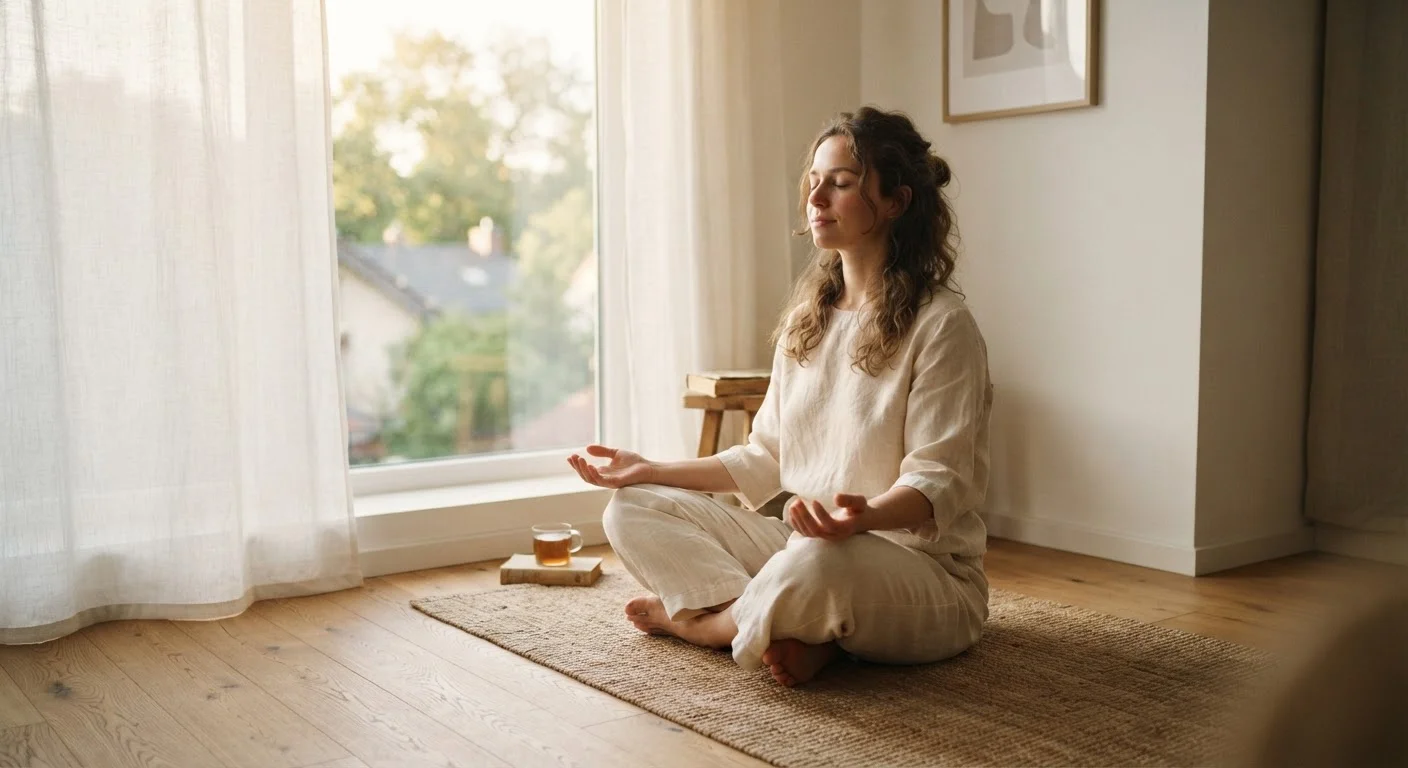
The simplest entry point requires nothing but a few minutes and a willingness to observe. Try this: sit comfortably, close your eyes if that feels right, and bring your attention to the physical sensation of breathing. Notice the air entering your nostrils, your chest or belly rising, the brief pause, and the exhale. When your mind wanders — and it will — simply notice that it has wandered, and gently return attention to the breath. Repeat for two to five minutes.
Noticing Distraction Is the Practice
Many beginners assume that a wandering mind means they're doing mindfulness wrong. In fact, the moment you notice your attention has drifted and you redirect it is precisely where the skill is being built. Treat each redirection as a successful repetition, not a setback.
That's a complete mindfulness practice. You don't need to extend it, perfect it, or feel anything particular at the end. The act of noticing your mind has drifted and redirecting it is the skill being trained, not an interruption of it.
If formal breath-focused practice doesn't suit you, consider these alternatives:
- Body scan: Moving attention slowly from your feet to the top of your head, noticing physical sensations without trying to change them.
- Mindful walking: Paying deliberate attention to the sensation of each step, the ground beneath your feet, sounds around you.
- Single-task focus: Giving complete attention to one activity — eating a meal, drinking a cup of coffee — without screens or multitasking.
Common Obstacles and How to Reframe Them
Most beginners hit the same walls. Understanding them in advance reduces the likelihood of abandoning practice prematurely.
- "I can't stop thinking."
- You're not supposed to. Thoughts will arise. The practice is noticing them without following every one into a chain of association. A busy mind is a normal mind — not a disqualifying one.
- "I don't have time."
- Two minutes is a valid session. The ceiling is not the floor. Habit formation research consistently shows that very short, regular repetitions outperform infrequent long sessions for building new behaviors.
- "I tried it once and felt nothing."
- Mindfulness is a skill developed over time, not an immediate experience. Expecting an acute effect from a first attempt is like expecting strength gains from one gym visit.
- "It feels self-indulgent."
- Attention regulation has practical utility — clearer thinking, reduced reactivity, better listening. Framing it as maintenance rather than luxury can help if this is a recurring objection.
When to Involve a Professional
Mindfulness is a widely accessible skill, but it is not a clinical intervention for everyone in every situation. If you are managing a diagnosed mental health condition — including anxiety disorders, depression, PTSD, or OCD — please speak with a qualified mental health professional before beginning or intensifying any mindfulness practice. Some research suggests that intensive practice can, in rare cases, be distressing for individuals with certain trauma histories or psychotic conditions.
A licensed therapist or psychologist can help you determine whether a mindfulness-based approach is appropriate, recommend evidence-based programs, and monitor how you respond. Mindfulness-Based Cognitive Therapy (MBCT), for instance, is a structured, clinician-guided program with strong evidence for preventing depressive relapse — quite different from self-guided apps or informal practice.
Just as you might approach any new habit with curiosity rather than rigid expectation, approach mindfulness the same way — with the understanding that support is available when you need it. The same groundedness that makes mindfulness valuable as a daily skill also makes it most useful when practiced in a context that fits your actual circumstances.
This article is for general informational purposes only and does not constitute medical or mental health advice. Always consult a qualified healthcare professional for guidance specific to your individual health situation.