

Key Takeaways
- An oily scalp and dry ends are distinct conditions that often require different treatments applied to different zones.
- Shampooing technique matters as much as product choice — applying cleanser only at the roots protects vulnerable ends.
- Conditioning from mid-length to ends, never at the scalp, addresses dryness without worsening oil production.
- Hair porosity influences how well moisture is absorbed and retained along the length of the strand.
- Over-washing strips natural oils, which can paradoxically trigger the scalp to produce even more sebum.
Why Your Hair Has Two Different Needs at Once
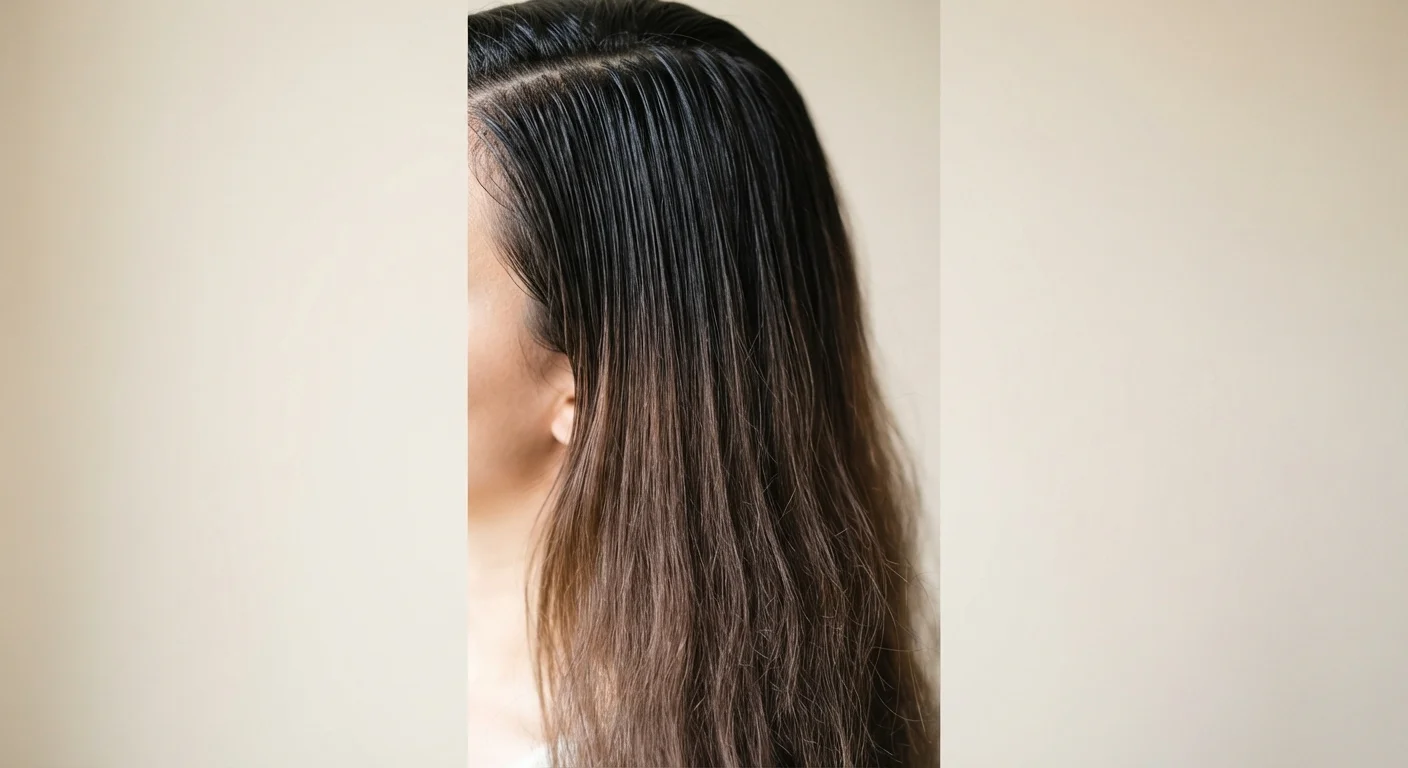
The scalp is skin — sebaceous glands embedded in the dermis produce sebum continuously, and in some individuals that production runs high. Meanwhile, the ends of the hair are the oldest part of the strand, often subjected to years of heat styling, environmental exposure, chemical processing, and mechanical friction. These two realities coexist on the same strand, which is why a single all-over approach rarely works.
Treating the whole head as one unit tends to create a cycle of overcorrection: harsh, frequent washing to manage grease at the roots strips what little moisture remains at the ends; skipping conditioner to keep roots light leaves the length brittle and prone to breakage. The fix isn't one product — it's a zoned strategy. Understanding how porosity affects moisture absorption can also clarify why certain products seem to weigh down roots while doing nothing for dry ends.
Oiliness vs. product buildup: know the difference
Scalp greasiness isn't always pure sebum — residue from conditioners, dry shampoos, and styling products can accumulate at the roots and mimic excess oil. A clarifying shampoo used occasionally (roughly once a month for most hair types) helps reset the scalp by removing buildup that regular shampoos may not fully clear. This is different from treating genuinely overactive sebaceous glands, so paying attention to what triggers the oiliness can guide the right response.
Strategies That Work Root to Tip
Shampoo the scalp, not the length
Shampoo's primary job is to dissolve sebum and remove buildup at the scalp — it doesn't need to be worked through the ends. Apply your cleanser only to the roots and let the rinse water carry any residue through the length as it runs off. This approach cleans where it's needed without subjecting already-dry ends to repeated detergent exposure.
Look for a shampoo formulated for oily or normal-to-oily scalps rather than a moisturising formula, which may contain heavier emollients that accelerate buildup at the roots.
Shampoo is for the scalp — let rinse water do the work on the length.
Condition mid-length to ends only
Conditioner applied directly at the scalp adds weight and occlusive ingredients directly where oil is already overproduced. Instead, apply conditioner from about two inches below the root down to the tips. Clip the hair up, let the product sit for the time recommended on the label, then rinse thoroughly.
For very dry or processed ends, a leave-in conditioner applied only to the last few inches after washing can provide sustained moisture without reaching the scalp at all.
Start conditioning two inches below the root — never at the scalp.
Adjust wash frequency thoughtfully
Washing every day may feel necessary when the scalp gets oily quickly, but frequent washing often perpetuates the cycle. Stripping sebum too aggressively can signal the scalp to ramp up oil production to compensate — a well-documented response of sebaceous glands. Gradually spacing out wash days by even one additional day can help recalibrate production over several weeks.
On non-wash days, a small amount of lightweight dry shampoo applied only at the roots can absorb excess oil without disturbing the length.
Frequent washing can trigger more oil production, not less.
Use heat styling selectively on the length
High heat is one of the primary contributors to end-dryness. It disrupts the cuticle — the protective outer layer of the hair shaft — and accelerates moisture loss along the length. When styling, apply a heat-protective product from mid-shaft downward before any tool contact, and use the lowest effective temperature rather than the highest available setting.
At the scalp, heat from blow-dryers is less damaging because new growth is in better structural condition, but even there, a cool or warm setting is preferable to high heat during regular use.
Apply heat protectant from mid-shaft down before any tool contact.
Incorporate a scalp-specific treatment separately
Scalp serums and exfoliating treatments — typically containing salicylic acid, zinc pyrithione, or similar actives — target root-zone concerns like excess sebum or flakiness without being applied to the full length. These are used at the scalp only, often before shampooing, and rinsed away before conditioning begins.
Understanding which scalp care habits are grounded in physiology helps in choosing targeted treatments over broadly marketed claims.
Scalp-targeted actives should be confined to the scalp — not distributed through the length.
Consider hair porosity when choosing end-care products
Porosity — how readily the hair cuticle opens to absorb and release moisture — varies along the length of a single strand. Ends that have been processed or heat-styled tend toward high porosity, meaning they absorb products quickly but also lose moisture rapidly. High-porosity ends often benefit from heavier, film-forming conditioners or oils that help seal the cuticle temporarily.
Roots, by contrast, tend toward lower porosity in healthier, unprocessed sections, meaning they don't need additional occlusive products to retain moisture. Understanding your hair's porosity profile is one of the most practical tools for making smarter product choices.
High-porosity ends absorb quickly but lose moisture fast — seal them with heavier products.
Try the 'scalp mask plus oil' method
On wash day, apply a clarifying or exfoliating scalp treatment to the roots and a nourishing hair oil or mask to the mid-length and ends simultaneously. Leave both on for 10–15 minutes before shampooing. This targets both zones in a single session without one treatment interfering with the other.
Building a Routine That Holds
Consistency matters more than perfection here. A zoned routine may feel unfamiliar at first, but most people notice a meaningful shift in balance within three to four wash cycles. It's also worth examining habits beyond product selection — how often you touch your hair, the heat settings on styling tools, and whether your pillowcase material is wicking moisture from the length all play a role. As with skincare, doing too much is often the root of the problem.
Hair texture and structure also shape what any given routine can achieve. Grooming advice that accounts for real variation in hair texture acknowledges that coarser or tightly coiled hair typically has fewer cuticle layers, making it more vulnerable to end-dryness while often having an oilier scalp — a combination that makes zoned care especially important. Adjust frequency, product weight, and application method to your specific texture rather than following a one-size routine.
This article is for general informational purposes only and does not constitute professional medical or dermatological advice. Consult a qualified healthcare or trichology professional if you have concerns about scalp conditions or hair loss.